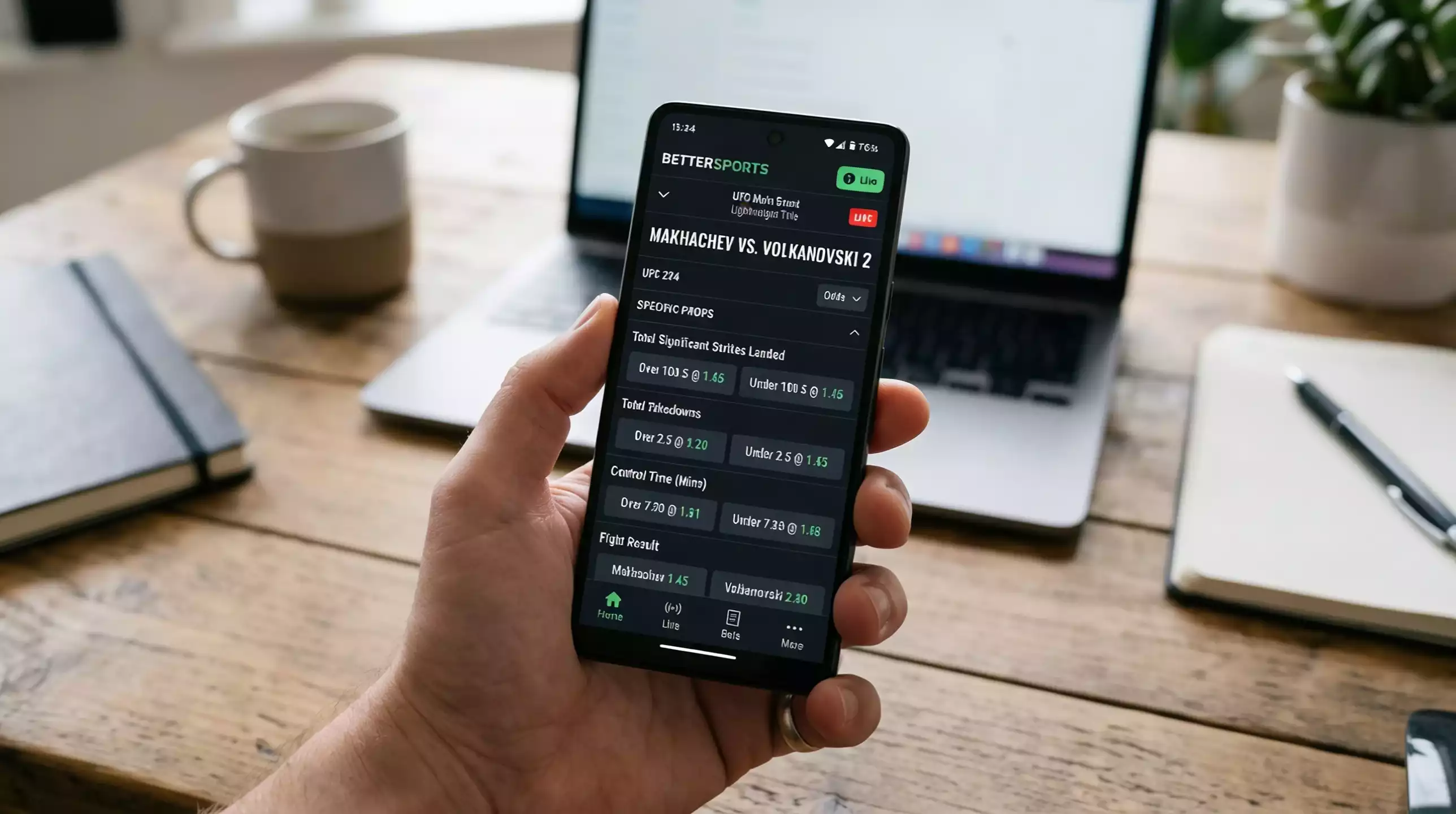
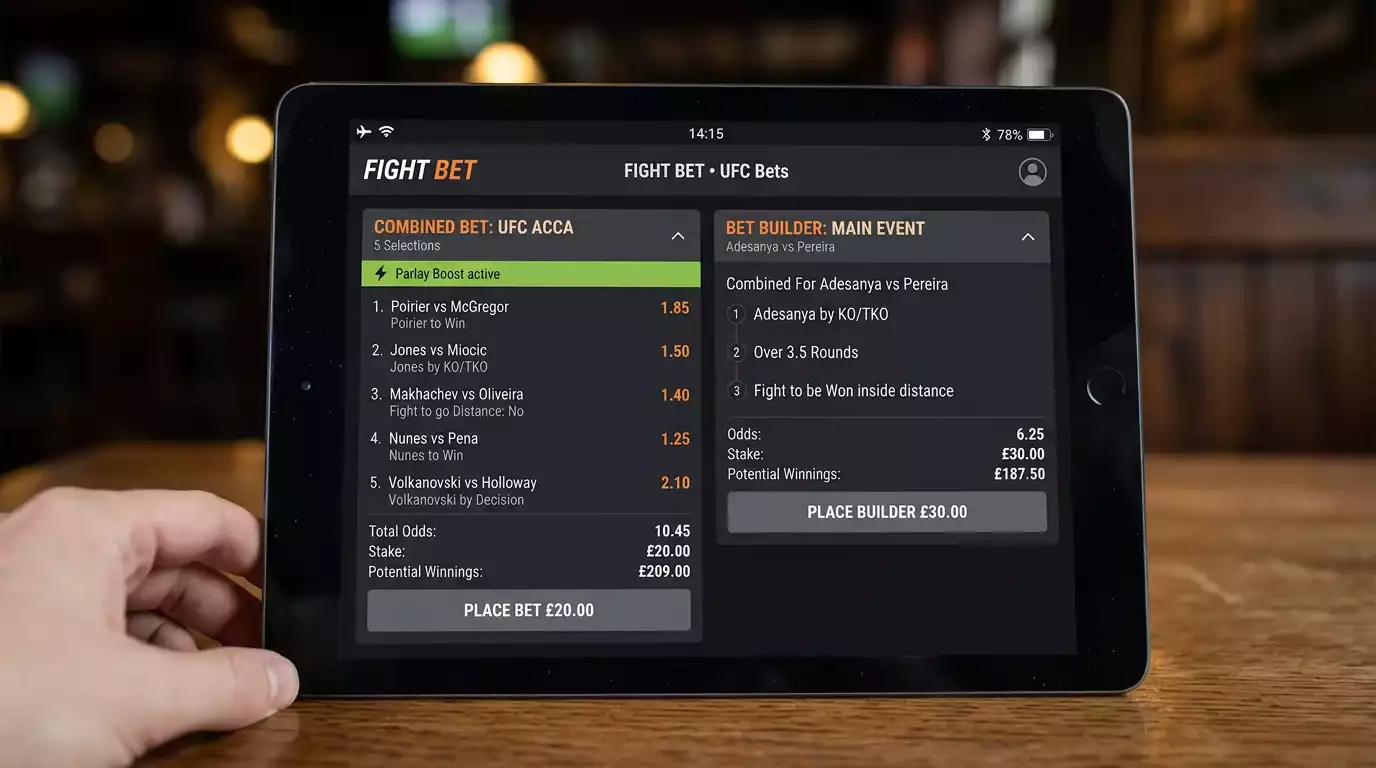
Fight to Go the Distance: A Binary UFC Market
 Available in US
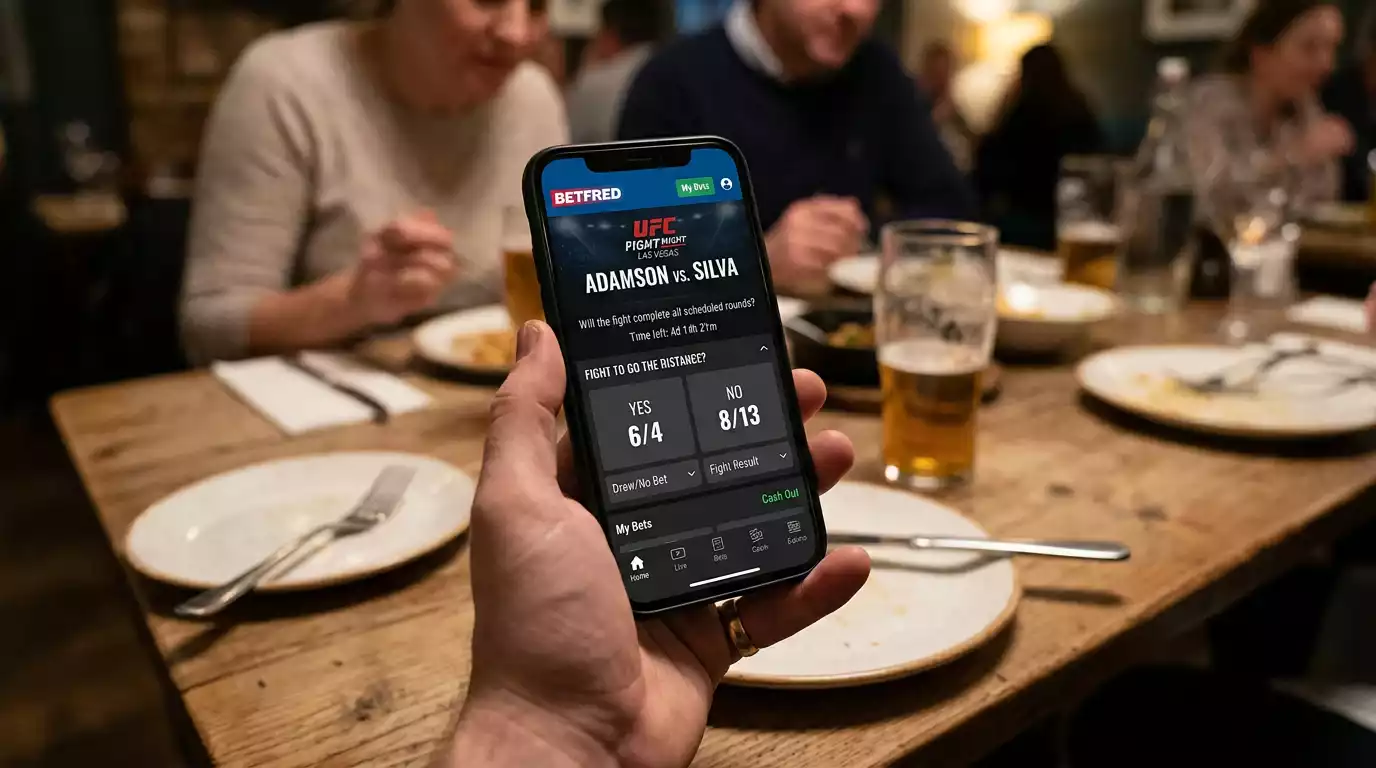
The distance market is the cleanest yes/no question the operator asks you all night. Will this fight reach the judges, or will it not? No round to pinpoint, no method to forecast, no stance assumption to defend. Just one of two outcomes, settled by the bell or the wave-off.
That cleanliness is what makes the market feel approachable to newer punters and what makes it deceptively difficult to price correctly. The simpler the question, the more the operator’s overround sits visibly inside the gap between the two displayed numbers, and the harder it is to find a quiet edge.
Refine your distance picks with UFC round betting for tighter predictions.
How the Market Is Priced
“Fight to go the distance — yes or no” is the canonical phrasing on every UK sportsbook menu. Yes pays if the official result is a decision — unanimous, majority, split or technical decision. No pays if the result is a stoppage of any kind: KO, TKO, submission, doctor stoppage, corner stoppage or disqualification.
The operator’s pricing starts from the same place as every other market: an internal probability estimate. On a three-round middleweight bout between two ranked fighters, the empirical distance rate sits somewhere around forty per cent across the historical UFC sample. The operator’s number for any specific fight will sit higher or lower depending on style, stance, finishing profile and durability.
Take a fight where the book sees a 45 per cent chance of decision. The fair prices are decimal 2.22 for yes and 1.82 for no. After a five per cent overround — slightly wider than the moneyline margin because the operator considers distance markets more speculative — the displayed prices land near 2.10 for yes and 1.74 for no. The margin lives entirely in that pair of numbers, and you can read it by adding the implied probabilities: 47.6 plus 57.5, total 105.1.
The pricing skews when the fighters are mismatched. If the book sees a 65 per cent chance of decision — a cagey striker versus a defensive grappler — yes will price near 1.50 and no near 2.75, with the same five per cent margin hidden in the gap. The information you read off the price is the operator’s distance probability, stripped of margin.
Finish Rates by Weight Class
Weight class is the single largest input to a distance-market read. Heavyweight bouts finish inside the distance roughly 65 to 70 per cent of the time across the historical UFC sample, because one clean punch from a 240-pound striker tends to end the conversation. Bantamweight and flyweight bouts finish 35 to 40 per cent of the time, because smaller fighters carry less one-shot power and produce more high-volume technical exchanges that judges score.
Tom Aspinall is the limit case. The UFC’s heavyweight champion holds the record for shortest average fight time at two minutes eighteen seconds — and that record sits inside the broader heavyweight pattern, where the no-distance side of the market is the default starting point on any Aspinall bout. The market reflects this: Aspinall main events typically price no decimal 1.25 or shorter, yes 4.00 or longer. The price gap is not arbitrage. It is the empirical distribution applied to a known finisher.
Middleweight bouts cluster around the empirical middle — 45 to 50 per cent finish rates depending on stylistic matchup. Lightweight and welterweight sit between, often shading toward higher finish rates than middleweight when the matchup pairs strikers, lower when it pairs grapplers.
The mistake I see most often is treating weight class as the only input. A flyweight bout between two pressure-fighting finishers can carry a finish rate as high as a middleweight bout. A heavyweight bout between two cautious kickboxers can go the full fifteen minutes more often than the weight class suggests. Apply the rate, then adjust for the specific fighters.
Distance in Five-Round Headliners
Five-round main events shift the question. The probability the fight reaches a decision rises with the extra ten minutes of cage time, but the relationship is not linear. Championship fights are more often paced for endurance, which keeps the fight on the feet, which feeds the decision rate. But championship-round fatigue also creates late stoppages that three-round fights rarely produce.
The result is a distance rate on five-rounders that sits broadly similar to three-rounders despite the extra time. Around fifty per cent decision rate on PPV main events is a useful working estimate, varying by matchup.
The texture I look for in a five-round distance market is the championship-round indicator. Fighters with strong cardio profiles — those who press harder in rounds four and five — tend to produce more late stoppages, which biases the same-priced bout toward no. Fighters with average cardio but high technical control — counter-strikers with footwork — tend to hold position and outscore late, biasing toward yes.
The market often misprices fighters making their first five-round appearance. The cardio gap between a three-round veteran and a five-round championship is not always priced in by the operator, and certainly not always priced in by the public moving the line. That gap is one of the cleanest informational edges available on a debut championship card.
Tactical Reads Before You Tap “Yes”
The instinct I have to fight hardest is the “they will both be cautious early” read leading to a yes bet. This read is almost always overrated.
Cautious starts rarely become cautious finishes. A fight that crawls through round one often opens up in round two as one fighter tries to manufacture the action the judges need to see, and that opening is when stoppages happen. Backing yes on the basis of a slow first round is a common way to lose to a round-three submission or a round-two head kick.
The reads that actually support a yes position are structural, not stylistic. A fighter who has been to decision in seven of his last nine bouts at top-fifteen level is a different proposition from a finisher in his fourth-from-bottom fight on a Fight Night. The latter has not faced opposition strong enough to drag him to the cards. The former has, repeatedly, and his record reflects what happens against good defensive grappling and disciplined footwork.
The reads that support a no position are stylistic, not structural. A finisher facing an opponent with a recent knockout loss, an opponent who has cut weight badly, or an opponent who has shown a tendency to fade in rounds two and three is the canonical no setup. The price will already reflect some of this, but not always all of it.
One overlooked input is venue and crowd. The home-crowd factor on UFC London cards — the O2 Arena cards have repeatedly drawn near-capacity crowds, with UFC Fight Night Evloev vs Murphy at 18,629 attendance and a £3.56 million gate in March 2026 — tends to push UK fighters into higher-output performances, which marginally increases the chance of a finish either way. UFC president Dana White’s reading of the London market – “London is one of the world’s greatest sporting cities and the fans are incredibly passionate about UFC” – is the surface version of an effect that shows up in betting markets as a small shift toward the no-distance side on UK-fighter main events.
For the broader question of how rounds-totals markets interact with the distance bet, the natural follow-on is the deeper read in my walkthrough of KO/TKO wagering, which approaches the no-distance side through the method-of-victory bucket.
See also: betting mma for all UFC fight duration markets.
The Bet I Keep Coming Back To
Distance markets are useful when you have a structural read on the fighter and the matchup, and worthless when you do not. The middle ground — backing yes because “it feels like a decision fight” or no because “someone always finishes” – is where the operator’s margin earns its keep.
The cleanest test before placing the bet is to ask what would change your mind. If you can articulate three specific events that would shift your read — fighter A misses weight by three pounds, fighter B has a difficult final media session, the venue switches to a smaller cage — your read is concrete enough to back. If you cannot, the bet is a coin flip dressed in confidence, and the operator is delighted to take your money on either side of it.
Does a TKO stoppage between rounds count as the fight not going the distance?
Yes. A corner stoppage or doctor stoppage between rounds is officially recorded as a TKO at the start of the next round, and the market settles as no — the fight did not reach the judges. The same applies to a refusal to answer the bell, which is recorded as a TKO and settled accordingly. The distance market resolves on the official result, not on the appearance of cage activity, so any non-decision outcome lands on the no side.
How are disqualification outcomes settled in the distance market?
A disqualification resolves as no — the fight did not go the distance, even if it ends in round three after a foul. The decision market requires the bout to be scored by the judges and the official result to be a unanimous, majority, split or technical decision. Any other result, including DQ, no-contest and stoppage for any reason, settles the distance market on the no side. No-contests sometimes void the market entirely depending on the operator, so check the void rules on the specific sportsbook before relying on the settlement.
Prepared by the Betting mma editorial staff.