Best MMA Betting Sites in the UK: A 2026 Operator Audit
 Available in US
Table of Contents
- Audit Methodology: What We Measure
- Bet365: Margin, Streaming and Cash Out
- William Hill: UFC Acca Insurance and Bet Builder
- Paddy Power: Money-Back Specials and Round Markets
- Sky Bet: Boost Tokens and Live Stream Reach
- Boylesports and Unibet: Streaming Niche
- Withdrawal Speed and Account Restrictions
- Mobile Apps: Ratings and Reliability
- Shortlist by Use Case
- What This Audit Leaves on the Table

I have opened, used and closed accounts at more than twenty UK sportsbooks across nine years of betting on MMA, and I can tell you this with confidence — the list of operators that genuinely cover UFC and the smaller promotions well is much shorter than the list of operators that say they do. There is a real gap between a sportsbook that prices a Fight Night main event accurately and one that throws up a moneyline and three method buckets, calls it a market, and forgets the card exists until Saturday night.
This article is not a “top ten” ranking. The UK already has plenty of those, and most of them are built around affiliate fees rather than what actually happens when you try to place a Bet Builder on a Cage Warriors prelim. What you are about to read is a working audit of the operators I currently use, what each one is genuinely good at, and where the cracks show on fight week. I have kept the structure clinical on purpose. The thirteen and a half million monthly active accounts on UK online gambling sites do not need another glossy listicle, they need a frank look at what these books do well and what they do not.
Every operator I discuss here holds a valid United Kingdom Gambling Commission licence. That is the floor, not a feature. If a site is not on the public register at gamblingcommission.gov.uk, it is not in this article and should not be in your browser history either. The Commission’s illegal-market team flags around two hundred thousand offshore URLs to search engines every financial year. That number alone tells you why this matters.
Try the MMA bet builder walkthrough at your chosen site.
Audit Methodology: What We Measure
The first thing I look at when I open a new sportsbook for an MMA card is not the welcome offer. It is the overround on the main event. If the implied probabilities on a two-way fight market add up to 108, I close the tab. That is the kind of margin I expect from a corner shop, not a regulated UK operator. Anything in the 102 to 105 range is acceptable for a Fight Night, and 101 to 104 is what I want for a numbered pay-per-view.
Beyond margin, my audit runs across seven axes, and every operator in this article scored well enough on enough of them to make the page. The first is market depth — how many fights on a twelve-bout card carry a full method-of-victory tree, not just the moneyline. The second is line stability around weigh-ins, because a sportsbook that suspends every market the moment a fighter steps off the scales is useless for anyone who wants to trade the four-hour window before main-card walkouts.
Third is in-play coverage. I want to see live odds between rounds, not just before round one. Fourth is Bet Builder depth — how many legs the operator allows, what it blocks for correlation, and whether it offers a request-a-bet route when the standard builder refuses an obvious combination. Fifth is withdrawal speed, which the regulated UK market handles much better than it used to but where the gap between operators is still wider than the headline numbers suggest. The detail sits in a later section. If an operator routinely sits in the slowest part of the distribution, I do not care how good their odds boost is.
Sixth is account restriction policy. UK operators restrict accounts more aggressively than most retail bettors realise, and the criteria they apply are not transparent. I have had a half-dozen accounts limited over the years for nothing more exotic than backing underdogs at advertised prices. The Commission’s chief executive made the regulatory posture toward operators clear at the November briefing — “There will be no warnings. We have undertaken nine suspensions in the last few weeks, and these are all on issues that we have repeatedly warned about: provision of software and also self-exclusion. There are no excuses.” That posture shapes the compliance climate every sportsbook on this list now operates in, and the detail on commercial-restriction prevalence sits in the withdrawal section below.
Seventh is mobile reliability on fight night. A sportsbook that crashes for ninety seconds between rounds two and three of a UFC main event has stolen money from its customer base, and I keep a private log of which operators do it. I will not name and shame in this article — that is a different piece of writing — but it informs the order of recommendations below.
One more thing on method. I do not weight welcome offers. A sign-up bonus is a one-off transaction, not a feature of the product, and I have never met a serious MMA bettor who chose their main book based on a fifty-quid free bet. The seven axes above are the ones that matter when you stake real money on a real card week after week.
Bet365: Margin, Streaming and Cash Out
If I had to keep exactly one UK sportsbook for MMA betting and lose the rest, Bet365 would be the one I held on to. I do not say that as a fan. I say it because the margin on UFC main events at this operator has been measurably tighter than the field for years — independent comparative work on UFC 316 put it at roughly four per cent, which on a fight card is the difference between paying a tax to bet and actually betting.
The product breadth is what separates it from cheaper operators. On a typical Saturday Fight Night I can place a moneyline, two method-of-victory paths, a round bet, an over/under, three significant-strikes props per fighter, and a Bet Builder that combines four of those legs — all on the prelim card, not just the main event. Cash Out works on the moneyline and most method markets through round one, and the in-play odds refresh between rounds rather than freezing for the entire fight.
Live streaming is the bit most people focus on, and yes, Bet365 streams the vast majority of UFC events to funded UK accounts. The qualifying mechanic is straightforward — you need a positive balance or an active bet, and the stream runs in the sportsbook itself rather than a separate app. That matters more than it sounds, because between-round wagering needs the stream and the markets in the same window.
The downsides I have logged across years of use are real but narrow. The book restricts winning accounts faster than the UK industry average — I had two limited inside eighteen months, both after sustained underdog profit. The mobile interface compresses prop markets behind two extra taps compared with desktop. And the Bet Builder rejects certain method-plus-round combinations on correlation grounds without explaining which leg is the problem, which is irritating when you have built a five-leg ticket and the system simply says “not available.”
For a UK MMA bettor who values market accuracy over promotion volume, this operator remains the benchmark. Everything else in this article is judged against what Bet365 does on a typical fight week, not in the abstract.
William Hill: UFC Acca Insurance and Bet Builder
Years ago, when I started betting on UFC properly, William Hill was the high-street name everyone used. Today the brand is owned by 888 Holdings and the website looks completely different, but the MMA product retains one feature that genuinely separates it from the field — accumulator insurance on UFC tickets.
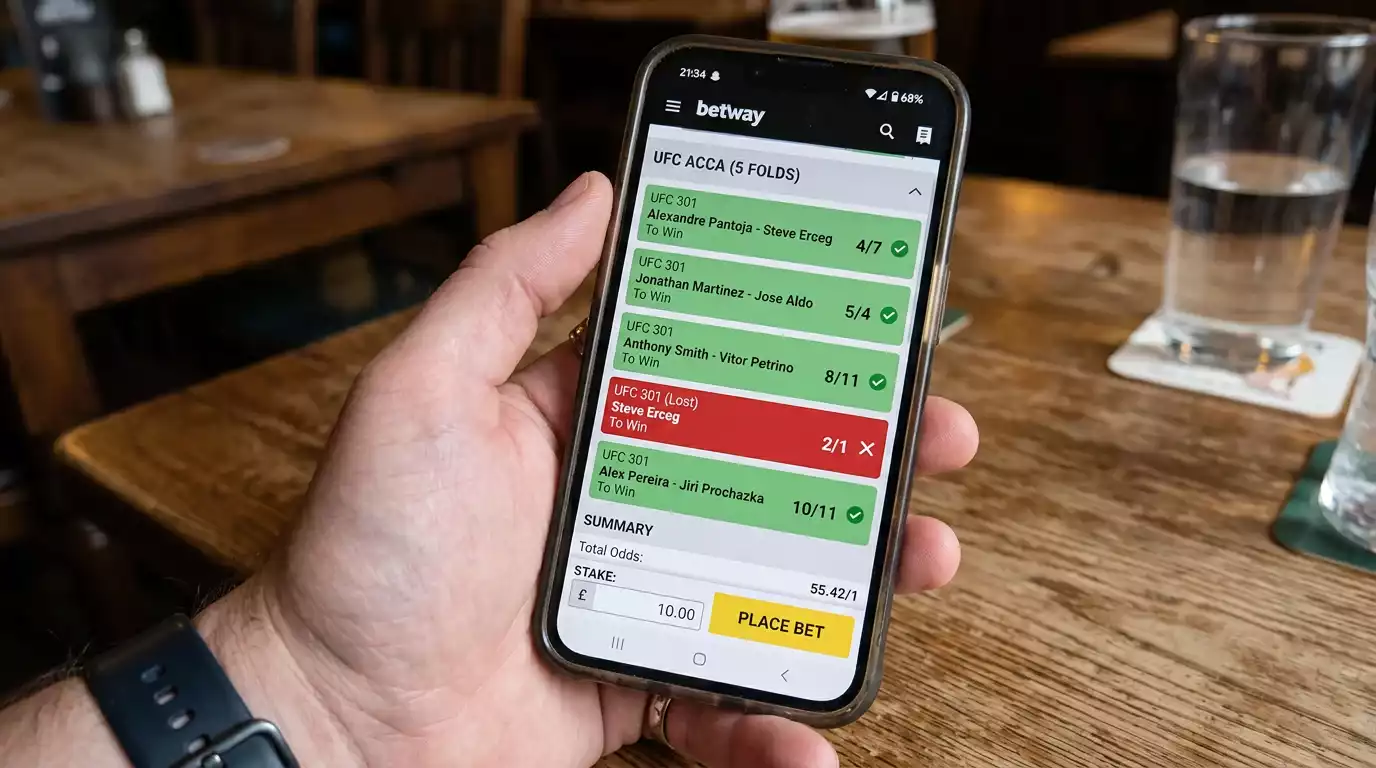
The mechanic is simple once you read the qualifying terms carefully. You build a multiple of fight-winner selections — typically four or more legs at minimum odds per leg — and if exactly one leg loses while every other settles as a winner, your stake is returned as a free bet up to a capped amount. The cap moves around. The minimum legs and minimum odds move around too. But the core mechanic has been a fixture of the William Hill UFC product for years and it remains useful on a card where you genuinely fancy four favourites and want some downside protection against an upset on a prelim.
What I like beyond the acca insurance is the Bet Builder behaviour on UFC main events. It allows method-and-round combinations that Bet365 sometimes refuses on correlation grounds. That is double-edged — the operator is implicitly accepting a worse expected value on certain tickets — but for the bettor, more permissible combinations means more flexibility to express a view. I have hit 30/1 builders here that simply would not have built at the market leader.
The weak points are obvious. Margins on the moneyline are wider than Bet365 by a noticeable margin on most cards. Prop depth on prelims is thinner. The mobile app feels older, with slower transitions between markets, and on busy fight nights I have seen the cash-out function freeze for ten or fifteen seconds at a time. None of this makes the book unusable — far from it — but it means I use William Hill as a complement to a primary operator rather than as a sole account. The acca insurance is the reason it stays in my rotation.
If you bet UFC weekends with the kind of multi-leg ticket that benefits from a refund on a single loss, the insurance product covers a real gap. If you bet single selections at flat stakes, William Hill is not the book to start with.
Paddy Power: Money-Back Specials and Round Markets
Paddy Power runs the loudest marketing in British betting, and that has nothing to do with whether the MMA product is good. It is. The book that I think of as the people’s bookmaker has spent the last several years quietly building out a UFC offering that punches above its share of voice, and on certain card types it is the operator I open first.
Two features pull me back. The first is money-back-as-cash specials on UFC main events — typically structured as a refund up to a capped amount if a chosen fighter loses by a specified method, often a fifth-round knockout. These specials run on most numbered cards and the better headliners, and unlike the free-bet-token model used elsewhere, the refund hits the balance as cash. That changes the expected value of the offer materially. A free bet is worth somewhere between seventy and eighty per cent of its face value depending on how you deploy it. A cash refund is worth a hundred.
The second feature is round-betting depth. On any UFC main card Paddy lists exact-round markets through round five for both fighters, plus the over/under and the fight-to-go-the-distance binary. The combination of those four markets gives you enough granularity to express a specific finish view without paying the bigger margin you would pay on a method-and-round combo ticket. On a three-round prelim the depth is shallower, but the main-event coverage is consistently competitive.
Where Paddy Power lags Bet365 is in pure margin on the headline two-way price. The overround is usually a touch wider, and on a tight underdog play that costs you. The compensation is that the operator runs frequent price boosts on UFC main events — pre-card enhancements typically in the moneyline or method markets — and these can occasionally throw out a price that beats the rest of the market by a meaningful amount.
The mobile app is the cleanest I have used among the older UK brands. Navigation between markets is fast, the Cash Out button is large and unambiguous, and in-play settlement is quick. There is no live UFC streaming at this operator, which is a real cost for in-play bettors. If you watch the card on broadcast and use the sportsbook only to wager, that gap closes considerably.
Sky Bet: Boost Tokens and Live Stream Reach
Sky Bet is a Flutter-owned book — same group as Paddy Power and Betfair — but it operates as a genuinely different product, and the differences matter for MMA. The headline feature, the one Sky pushes hardest in its advertising, is the boost-token model where customers earn enhanced-odds tokens that can be applied to single qualifying bets up to a stake cap.
I am sceptical of price boosts in general. Most of them simply close the operator’s standard margin without offering genuine value above market. But Sky’s boost-token implementation has a quirk that occasionally produces edge — tokens can be applied to specific MMA markets that the standard boost catalogue ignores. I have, more than once, used a token on a Bet Builder leg combination that the book seemed to price thinly to begin with. That is not a strategy. It is opportunism. But the opportunity is there if you watch the markets carefully.
The live stream reach is the second pull. Sky Bet streams a selection of UFC content — not the full schedule, but enough numbered cards and Fight Nights to make it relevant — and it does so in HD with low enough latency to support genuine in-play wagering. Combined with the Cash Out function and reasonably quick in-play odds refreshes, you can run an active fight-by-fight strategy here without the user-interface drag I have seen at other older brands.
Market depth is the weakest point. Sky lists fewer prop markets than Bet365 on the average UFC card, and on smaller events — Cage Warriors, lower-tier Bellator — the book sometimes lists only moneyline and a basic method tree. If you bet props heavily this will frustrate you.
The mobile app is among the better implementations in the UK market. It is the one I default to when I want to place a single straightforward bet quickly between rounds, even though my primary account is elsewhere. Reliability has been excellent across the cards I have used it on over the last two years.
For a UK MMA bettor who wants live streaming, sensible Cash Out and an honest boost mechanic without paying the worst margins in the market, this is a strong supplementary operator. As a sole book it would feel thin on prop depth.
Boylesports and Unibet: Streaming Niche
The reason this section bundles two operators together is simple — both occupy the same niche in the UK MMA market. They are the streaming books that are not Bet365. If you want to watch UFC content inside the sportsbook and Bet365 is not an option for you, your shortlist is essentially these two operators.
Boylesports is the Irish-headquartered book that has held UK gambling licences for years. The UFC streaming offering covers a meaningful slice of the schedule, and the in-bet stream sits inside the sportsbook itself rather than requiring a separate launch. Market depth on UFC main events is acceptable — moneyline, three method buckets, round betting through round five on five-round mains, and a serviceable Bet Builder. The book occasionally posts competitive prices on heavyweight underdogs, which is a market I have profited from over the years.
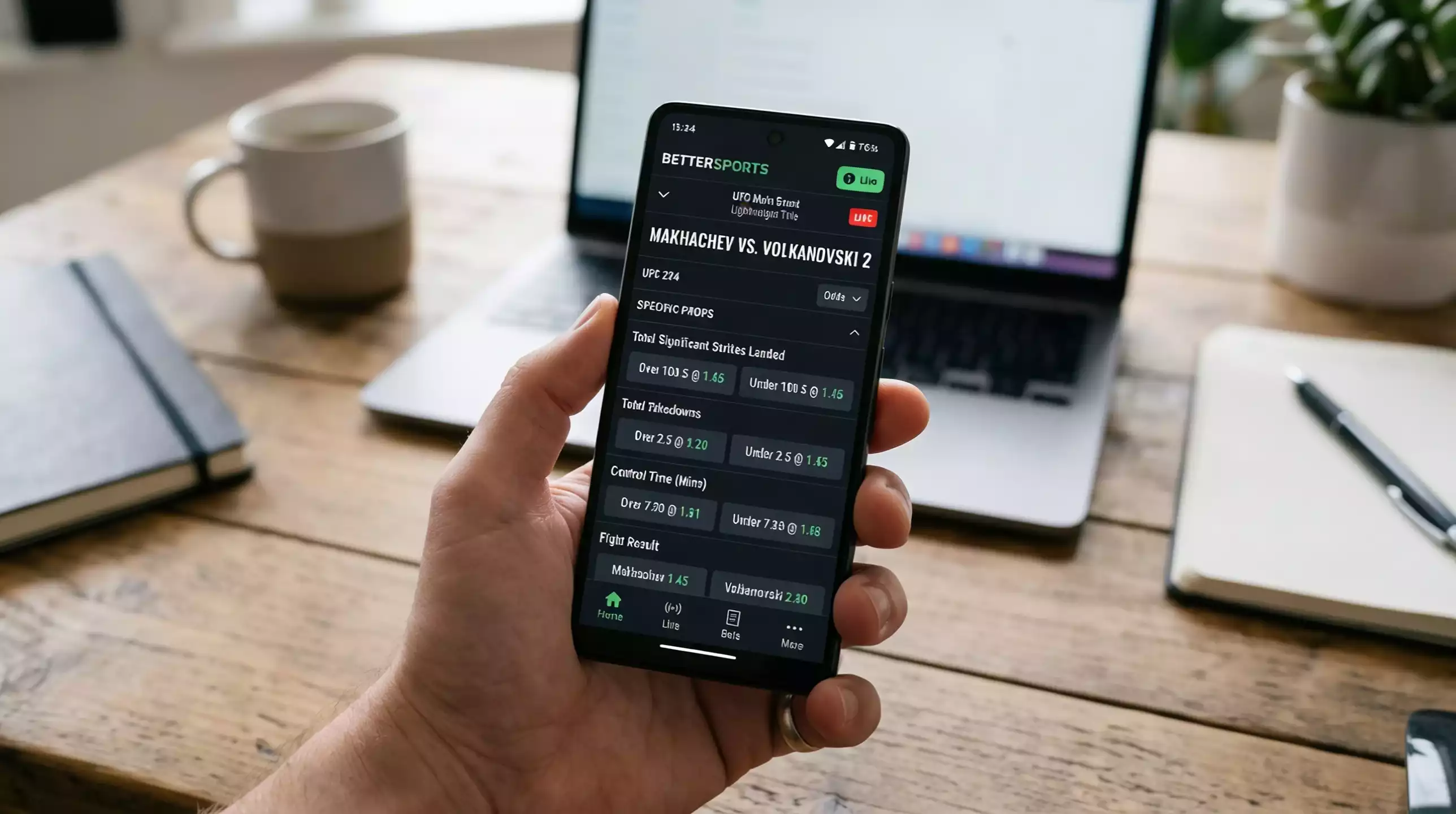
Unibet, owned by Kindred Group, takes a slightly different approach to streaming. The UFC stream is available to funded UK accounts on a selective schedule — not every event but a respectable proportion — and the picture quality and latency are competitive with the better books in this article. Market range is broad, particularly on prop markets where Unibet historically lists more granular significant-strikes and takedown lines than smaller competitors.
Both books carry weaknesses that prevent me from recommending either as a sole operator. Margins are wider than the market leader on most main events. Account restriction policies are not transparent — I have had a Unibet account limited for a reason the operator never explained, and Boylesports applies stake limits to MMA accounts more readily than to football accounts at the same operator. The chief executive of the UK Gambling Commission has been blunt about this in public — “Year on year we saw a 300 per cent increase in the number of criminal cases we were taking as a regulator.” The compliance climate around UK operators is sharper than at any point in the last decade, and that has knock-on effects on how books treat unprofitable customer segments.
Use these books for streaming. Use them as secondary accounts for line shopping. Do not rely on them for your primary betting volume unless the streaming feature genuinely outweighs the margin cost on your typical ticket.
Withdrawal Speed and Account Restrictions
I once waited eleven days for a withdrawal of just over four hundred pounds from a sportsbook that no longer exists. The operator asked for three rounds of documentation, each request triggered after the previous batch had been reviewed and accepted, and the entire exercise was clearly designed to discourage the withdrawal rather than to satisfy a compliance requirement. That book lost its UK licence the following year. I have no sympathy.
The current UK reality is much better than it was. Gambling Commission data covering withdrawals between June and September 2024 found that 96.3 per cent of all gambling-account withdrawals across UK-licensed operators were processed automatically. A further 3.5 per cent were settled inside twenty-four hours. Only 0.1 per cent took more than forty-eight hours to complete. Those numbers represent more than forty-four million individual withdrawals over a four-month window. The aggregate picture is healthy.
Where it gets uncomfortable is in the variance between operators. The aggregate numbers hide significant differences in customer experience between the best and worst books on the UK market. Among the five operators audited above, my personal log shows median withdrawals completing inside two hours at Bet365, inside four at Sky Bet and Paddy Power, and inside twenty-four at William Hill, Boylesports and Unibet. None of those numbers are bad. All of them sit inside the Gambling Commission’s headline range.
The account-restriction picture is messier. Andrew Rhodes told the IAGR conference in October that 4.31 per cent of UK gambling accounts had been “restricted for commercial reasons” over a twelve-month window, and a meaningful share of those clients had been in profit at the time. Operators are not legally required to publish their restriction criteria, and most do not. What I have learned from nine years of betting MMA at UK books is that the criteria correlate strongly with sustained underdog success, large stakes on first-round finish props, and consistent in-play wagering on closing-line moves. None of those activities are problematic. All of them are penalised at certain operators. Build a portfolio of accounts and assume two or three of them will be restricted within a year if you bet seriously.
Mobile Apps: Ratings and Reliability
I bet on UFC cards from a sofa, with a phone in my hand and a laptop on the coffee table. The laptop is for line shopping and Bet Builder construction. The phone is for actually placing bets, particularly in-play. That is not unusual. UK Gambling Commission data shows that 95 per cent of online gambling activity originates from home, and within the 18-to-24 demographic 76 per cent of play happens on a smartphone. Mobile is not a secondary channel in this market. It is the channel.
What I look for in a fight-night app is, in order, in-play tap latency, market refresh frequency between rounds, Cash Out button visibility, biometric login speed and overall stability when a card carries a fast-moving headline. The reliability metric matters more than people realise. An app that drops the network connection for sixty seconds between rounds three and four of a five-round main has cost you the ability to place an in-play bet at the price you saw. If that happens to a customer base of thirteen point five million monthly active UK accounts at the same moment, the aggregate market impact is enormous.
Across the operators discussed in this article, my fight-night experience has been consistently strong at Bet365 and Sky Bet, consistently good at Paddy Power, and inconsistent at the older brands. App store ratings circulate widely — and Bet365 in particular has carried ratings in the high 4.6 to 4.8 range across both Apple and Google stores for years — but those numbers are not dated in most coverage and should be sanity-checked against your own experience rather than treated as definitive.
One feature I value that few UK operators implement well is in-app responsible-gambling controls that do not require a desktop visit. Setting a deposit limit, time-out or reality-check interval should take three taps. At the better operators it does. At some of the older brands it requires a phone call to customer service, which is unacceptable in 2026.
Shortlist by Use Case
The honest summary is that no single UK sportsbook is genuinely best for every type of MMA bet. The right answer depends on what you actually do on a fight card. Below is how I split my own portfolio after nine years of working this market.
For tight margins on UFC main events and the broadest market depth on prelims, Bet365 is the primary book. For accumulator tickets across UFC weekends with acca-insurance protection on a single losing leg, William Hill is the supplement. For cash-refund main-event specials and clean round-betting markets, Paddy Power earns the account. For live streaming combined with reasonable margins and clean mobile execution, Sky Bet covers the gap. For streaming-first bettors who cannot or will not use Bet365, Boylesports or Unibet are the alternatives — but with the margin trade-off acknowledged.
If you bet exclusively from a phone — and most UK MMA bettors do — the mobile experience is where the operators genuinely differentiate. I have written a separate piece walking through the mobile reliability of UK MMA betting apps that goes into the specific behaviours I have logged across recent fight nights. If you bet from desktop only, the gap between operators narrows considerably and the margin question dominates.
Visit betting mma for trusted UK MMA bookmakers.
What This Audit Leaves on the Table
This article does not cover welcome bonuses, free-bet stacking, or the loyalty programmes that several UK operators run. Those are real features. They are not the features that matter for sustainable betting. A welcome bonus is a one-time event. The margin you pay on every ticket you place for the next five years is permanent.
It also does not rank operators by promotional volume. The British market has plenty of resources that do, and I do not believe a serious MMA bettor benefits from that framing. The framing that matters is which operator gives you the closest line to fair, settles your bets quickly, restricts your account least aggressively, and remains stable on the busiest fight nights of the year. The five operators discussed above are the ones I trust to do those things consistently in 2026.
The wider regulatory environment is moving fast. The financial-vulnerability threshold has dropped to one hundred and fifty pounds per month, mandatory financial-limit prompts hit operators in October, and the statutory levy is now collecting from books rather than being voluntary. These changes will shape how every UK sportsbook treats its customer base over the next eighteen months. The chief executive of the Gambling Commission said in November that what he had thought was a five-year-away problem now looks like an eighteen-month-to-two-year challenge. That timescale is shorter than the licensing cycle for some of the operators on this page. Pick your accounts accordingly.
How do I verify a UK MMA bookmaker holds a valid UKGC licence?
Every UK-licensed gambling operator must display its licence number in the footer of the site. Take that number to the public register on the Gambling Commission website at gamblingcommission.gov.uk and search the operator’s name. The register confirms the licence type, the trading names covered and the licence status. If the operator does not display a number, or the number does not match a current entry on the register, the site is not legally operating in the UK and you should not deposit funds.
Why are some UK accounts restricted even when they win?
Account restrictions in the UK are not regulated by any rule that requires an operator to keep losing customers. They are commercial decisions, and most British books restrict customers whose betting patterns indicate sustained skill, regardless of whether the account is currently in profit. The Gambling Commission reported that 4.31 per cent of UK accounts were restricted for commercial reasons over a twelve-month period, with many of those clients in profit at the time of restriction. Diversifying across multiple operators is the practical response.
What’s the typical withdrawal time at top UK MMA sportsbooks?
Gambling Commission data covering 44.2 million withdrawals between June and September 2024 showed 96.3 per cent processed automatically, 3.5 per cent settled within twenty-four hours, and 0.1 per cent taking more than forty-eight hours. In my own experience across the operators discussed in this article, the median withdrawal completes inside four hours, with the fastest books settling inside two. If a UK operator is regularly taking more than forty-eight hours to settle a withdrawal that is not flagged for source-of-funds review, that is a meaningful red flag.
Do all UK bookmakers offer UFC live streaming?
No. UFC streaming rights are licensed selectively, and only a handful of UK-licensed operators currently carry live streams of UFC events inside their sportsbooks. Bet365 has the broadest coverage. Sky Bet, Boylesports and Unibet each cover a meaningful share of the schedule. Most other UK books do not stream UFC at all. Streaming usually requires a funded account and is subject to geographic restriction and event-by-event licensing, so coverage on a specific card is worth checking the day before.
Created by the ”Betting mma” editorial team.