KO/TKO Wagering: How the Method-of-Victory Market Splits
 Available in US
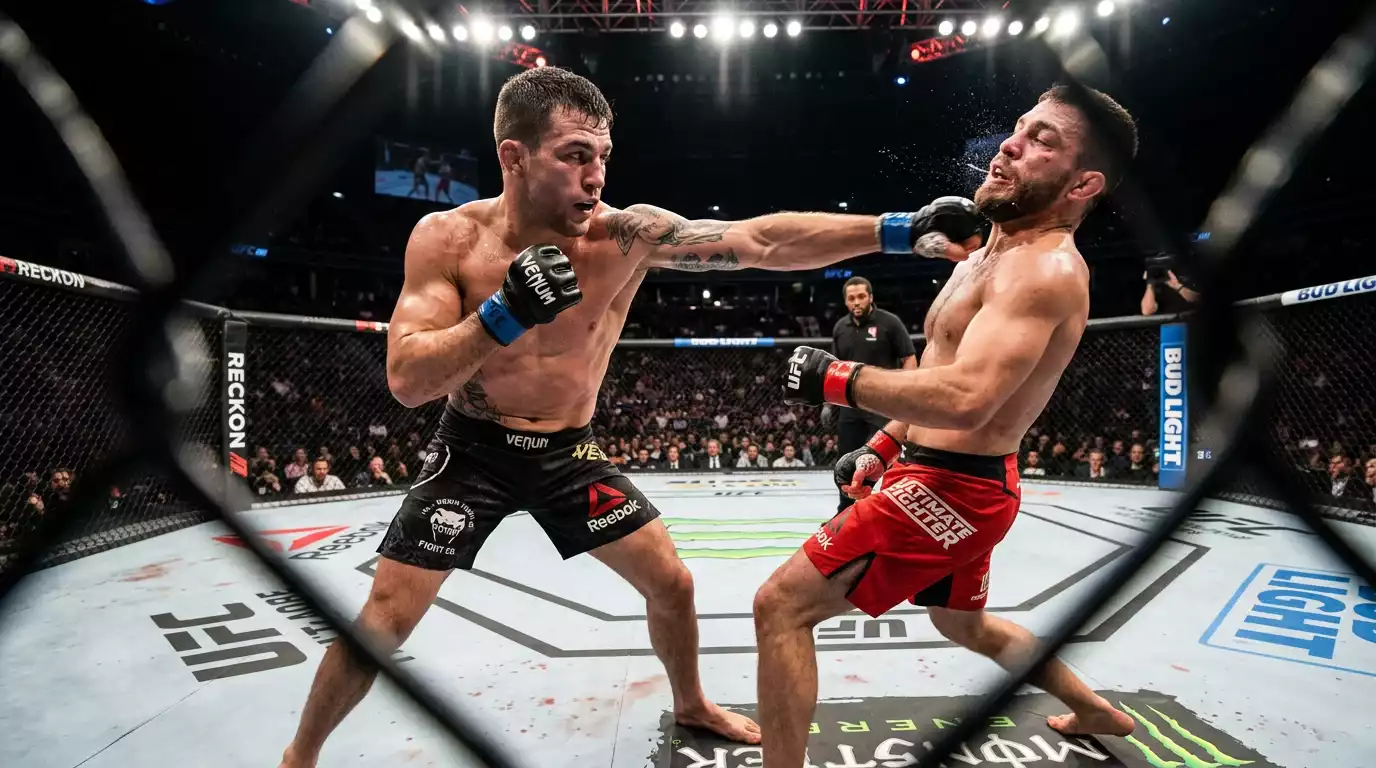
The first thing every new UFC bettor needs to internalise about KO/TKO wagering is that those two letters are not the same thing. A clean knockout — fighter unconscious, referee waving off, opponent celebrating — is one outcome. A TKO — fighter still mostly conscious, referee stepping in to protect them from further damage — is a separate outcome. The market settles them as a single bucket. That settlement is the reason I treat this market as one of the highest-value categories on the card.
If you have backed only KOs, you have probably noticed that you cash slightly less often than you expected. The TKO bucket — corner stoppages, doctor stoppages, referee stoppages mid-ground-and-pound — is where the bulk of the “stopped before the cards” outcomes actually live. Folding both into one market is a feature, not a bug.
Explore the grappling angle with UFC submission betting as an alternative.
What Settles as KO/TKO
On every UK sportsbook menu, the KO/TKO bucket includes five settlement triggers. The cleanest is the canonical knockout: fighter struck unconscious, referee waves off, official result reads KO. The second is the standing TKO: referee stops the fight while one fighter is still upright but no longer defending intelligently. The third is the ground-and-pound TKO: referee waves off while the fighter on bottom is still conscious but is absorbing damage without active defence.
The fourth is the doctor stoppage caused by strikes — a cut over the eye, a broken nose, an orbital fracture — where the doctor rules the fighter cannot continue safely. The fifth, and the one most often disputed, is the corner stoppage: the fighter’s corner throws in the towel between rounds, or the fighter refuses to answer the bell. All five settle as TKO and pay the KO/TKO method-of-victory market.
What does not settle on this bucket: submissions, decisions of any kind, no-contests, disqualifications, and the rare doctor stoppage caused by injury unrelated to a strike — a torn ACL from a missed kick, for example. Submissions sit in their own method bucket. Decisions sit in theirs. No-contests void the market.
The fold of standing TKO with ground-and-pound TKO is where the historical edge lives. A fighter with a positive significant strike differential above 1.5 systematically out-finishes the field in the method-of-victory market, and most of those wins come through TKO rather than clean unconsciousness. The strike-differential signal feeds the bucket cleanly because it captures both clean KO finishers and grinding ground-and-pound finishers under one number.
Striker Profiles That Cash
I divide UFC finishers into four archetypes, and the KO/TKO market prices them very differently.
The first archetype is the one-shot puncher. Heavy hands, low strike volume, low takedown defence sometimes, but one clean connection ends the fight. The market often misprices these fighters when they face an opponent on a knockout-loss streak — the chin durability gap shows up in betting markets late, and the no-distance side carries an edge for several fights after the first loss before the line catches up.
The second archetype is the volume striker. High output, accumulating damage, often finishing in rounds two or three when an opponent fades. Switch-stance fighters cluster here — 57 per cent UFC win rate against opponents who cannot read the angle changes — as do southpaws at 53 per cent. The KO/TKO bet on volume strikers is essentially a bet that pace will overwhelm defence before the bell saves the opponent.
The third archetype is the ground-and-pound finisher. Wrestler-strikers who close distance, secure top position, and punish from inside the guard until the referee intervenes. The market sometimes prices these fighters as submission threats, when in fact their submission rate is low — they finish by strikes, in a positional context. Reading the archetype right is one of the cleanest method-of-victory edges available.
The fourth archetype is the late finisher. Fighters who do not threaten in round one but break opponents down through rounds two and three. The price on these fighters in the KO/TKO bucket sits relatively cheap because the public undersells “round three finisher” relative to “round one finisher,” even when the empirical record suggests the late finisher gets to the same destination more reliably.
The wrong way to use these archetypes is to apply them to a fighter without checking their last three or four bouts. A canonical one-shot puncher coming off a fight where he absorbed serious damage is no longer the same proposition. A volume striker recovering from an injury layoff often returns at lower output for two or three fights. The archetype is a starting point. The recent record is the adjustment.
Pricing Relative to Decision and Submission
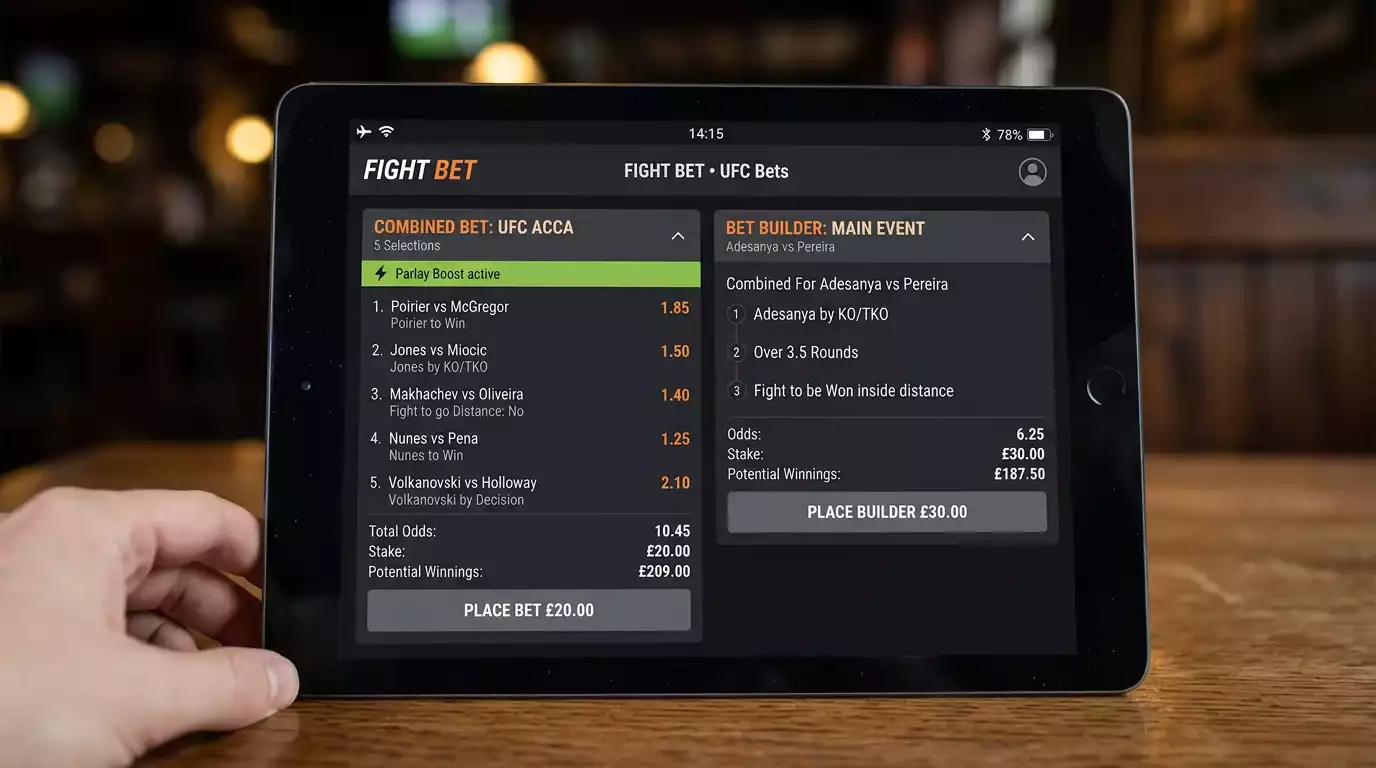
The full method-of-victory menu on a UFC bout typically has six prices: fighter A by KO/TKO, fighter A by submission, fighter A by decision, and the same three for fighter B. Reading the spread across all six is where the real understanding lives.
Take a hypothetical lightweight bout. Fighter A is moneyline decimal 1.50, Fighter B is decimal 2.75. The method-of-victory prices break down as: A by KO/TKO at 3.50, A by submission at 5.00, A by decision at 3.20, B by KO/TKO at 6.00, B by submission at 9.00, B by decision at 5.50.
Strip out the margin and these prices tell you the book’s view: A wins by KO/TKO with probability around 27 per cent, by submission 19 per cent, by decision 30 per cent. B wins by KO/TKO 16 per cent, by submission 10 per cent, by decision 17 per cent. Sum: 119 per cent on the raw, meaning the margin sits at roughly 19 per cent across all six prices — wider than the moneyline because the operator is asking you to be right about both the winner and the method.
The mispricings happen where the operator’s distribution differs from yours. If you think A is a one-shot puncher facing a chin-impaired opponent, the 27 per cent KO/TKO probability may be low — your own number might be closer to 40 per cent. Back the KO/TKO at 3.50, accept the wider margin, and trust your read on the archetype.
For the broader treatment of how this market splits versus submission and decision outcomes, the follow-on read is in my walkthrough of submission betting on UFC cards.
Edge Cases: No Contest and DQ
Three settlement edge cases come up often enough on UFC cards to be worth flagging.
The first is the corner stoppage that the fighter disputes. A fighter whose corner throws in the towel, then visibly objects to the stoppage, is still recorded as a TKO loss. The official result is what settles the bet, not the fighter’s reaction. This trips punters who assume a “controversial” stoppage somehow does not count. It counts.
The second is the doctor stoppage caused by an accidental foul. A clash of heads opens a cut over the eye; the doctor rules the fighter cannot continue. If the foul is ruled accidental and the fight has not passed the round where it can be scored as a technical decision, the official result is usually a no-contest, and the method-of-victory market voids. If the foul is ruled intentional, the result is a disqualification, and again the KO/TKO market does not pay.
The third is the borderline TKO at the bell. A referee waves off at 4:58 of round one. Was the official time of stoppage 4:58 of round one, or 5:00 — the end of round one? The official time recorded by the commission is what settles. Operators do not interpret. If the commission records 4:58, the method bucket pays. If the commission records the bell, the method bucket usually still pays as a round-one TKO. The detail matters only for round-and-method combination bets, where the round number is a separate leg.
The wider context here is the integrity wrap that now covers every UFC card. The UFC works with an independent betting integrity service to monitor wagering activity on every event — in the organisation’s own framing, nothing matters more than the integrity of the sport, and the integrity partner monitors wagering on every UFC event. When that monitoring triggers a pull-down — as it did with the November 2025 Dulgarian case — every method bet on the cancelled fight voids. Read the void rules on your operator’s site. The standard treatment is full refund, but the timing of the credit varies.
Visit betting mma for all UFC finish markets.
Why I Treat This Market as One Bucket
The temptation in method-of-victory betting is to try to be smarter than the operator by picking the specific mechanism — clean KO, ground-and-pound, doctor stoppage. The empirical record suggests this precision rarely pays. The KO/TKO bucket folds the five settlement triggers into one price, and the price compensates you for the variance in mechanism without asking you to forecast which specific mechanism applies.
I forecast the archetype, the matchup, and the chin durability. I let the bucket handle the settlement. The market rewards that discipline more reliably than it rewards trying to split the bucket open.
Does a corner stoppage count as a KO/TKO on the method-of-victory market?
Yes. A corner stoppage — where a fighter’s corner throws in the towel between rounds, or the fighter refuses to answer the bell — is officially recorded as a TKO at the start of the next round and settles on the KO/TKO method-of-victory bucket. The market does not distinguish between corner stoppages, doctor stoppages caused by strikes, ground-and-pound stoppages and clean unconsciousness. All five settlement triggers fold into the same price, which is one of the reasons the bucket carries the empirical edge that splitting the mechanism does not.
How is a doctor stoppage between rounds settled?
A doctor stoppage between rounds caused by strike damage — a cut, a swollen eye, a broken nose — settles as TKO at the start of the next round and pays the KO/TKO method bucket. A doctor stoppage caused by injury unrelated to a strike, such as a torn knee ligament from a missed kick, is more often recorded as a TKO due to injury and settles the same way, though operators vary on this edge case. Accidental fouls causing the stoppage are more likely to produce a no-contest result, which voids the method-of-victory market entirely.
Published by the Betting mma team.