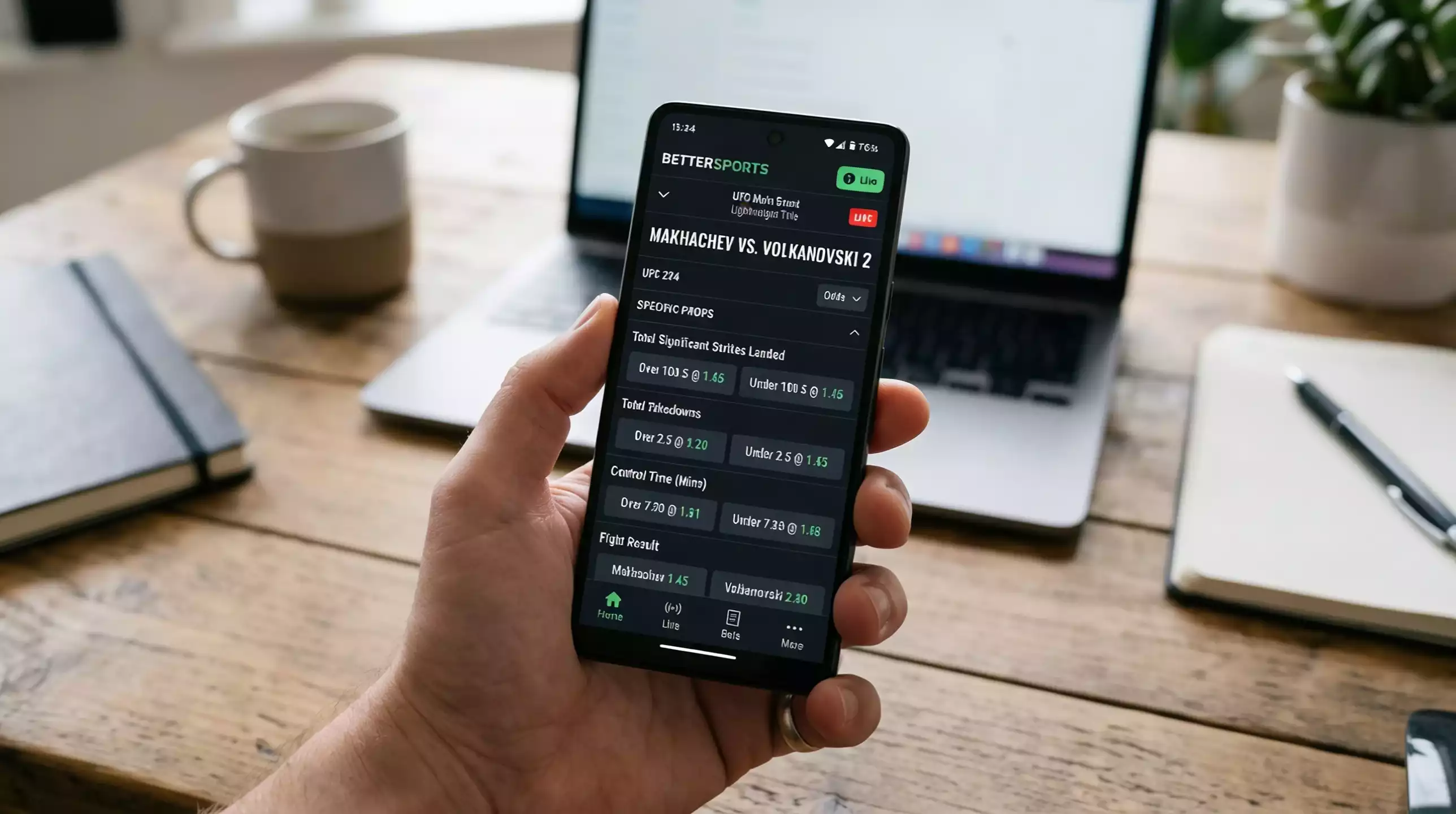
Late Replacement Betting in UFC
 Available in US
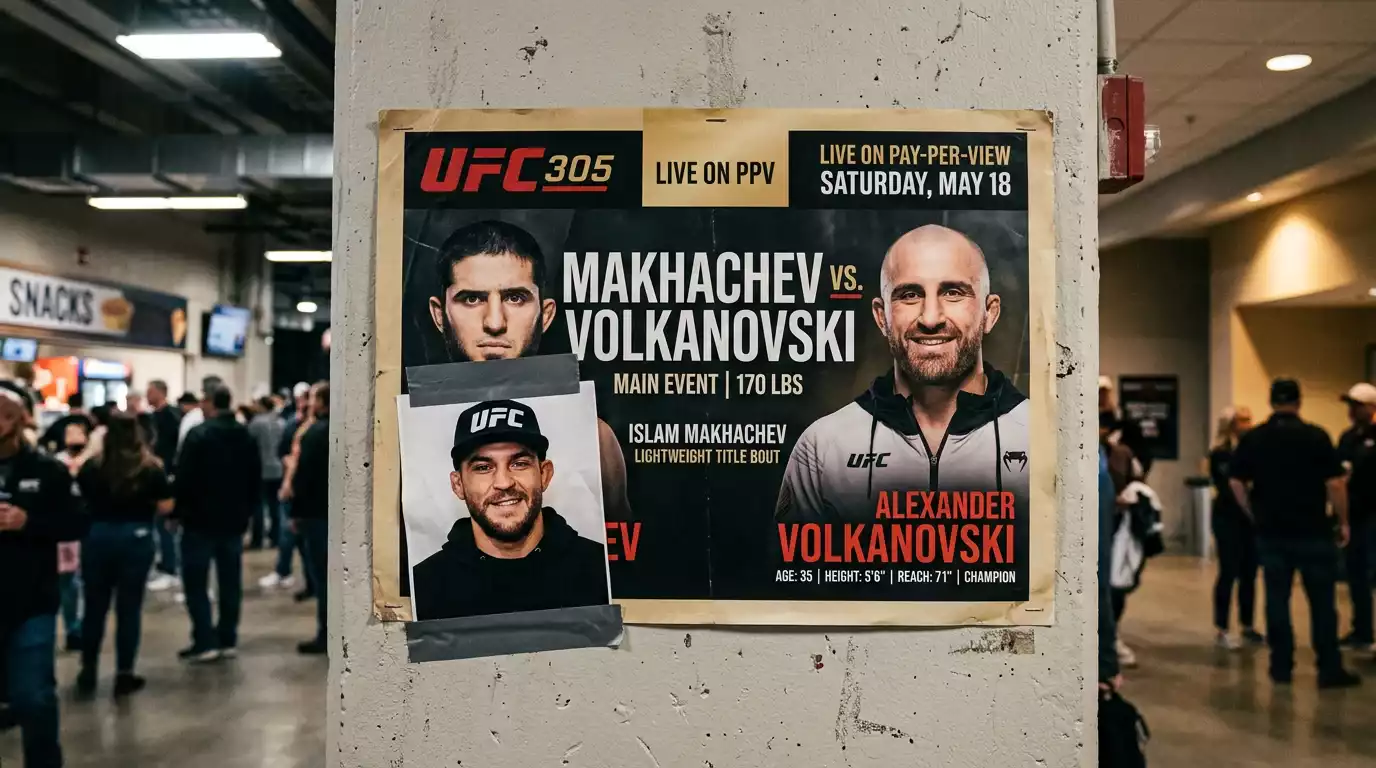
Late replacements are the only situation in UFC betting where the line is provably wrong at the moment it opens, and the only question is how wrong. A fighter takes a bout on five days’ notice. He has not cut to the weight in 18 months. He has not trained for this specific opponent. He has not had time to study tape, plan a gameplan, or even land in the host city with enough hours to acclimatise. The operator has to put a number on him. The number is necessarily an approximation.
The myth is that the replacement is always the underdog. Sometimes he is. Sometimes he is the better fighter who happens to be undertrained, in which case the underdog price covers a real edge that the favourite line does not capture.
Track how short-notice changes move the line in our UFC weigh-in line movement guide.
How Lines Adjust When a Replacement Steps In
The standard operator response to a late replacement is to suspend the market, recalculate the moneyline, and reopen at a new price. The adjustment typically widens the favourite line by 20 to 60 per cent of the original price, depending on the gap in profile between the original opponent and the replacement.
So a fight where the favourite was priced at decimal 1.50 might reopen at decimal 1.25 if the replacement is a lower-tier fighter, or at decimal 1.70 if the replacement is a higher-ranked fighter taking the bout up a weight class. The market sometimes overshoots the adjustment in the public-pressure phase between the announcement and fight night, which is the window in which value most often appears.
The November 2025 Dulgarian case offered the clearest recent example of what dramatic line movement looks like under late-window pressure. The coefficient on Dulgarian shifted from minus 250 to minus 154 in the day before the bout — a colossal compression that prompted the integrity service to call, the fight to be pulled, and Caesars and DraftKings to return the stakes. The case is now the canonical reference for how late-window line shifts get scrutinised in the integrity ecosystem, and the wider point is that aggressive late shifts trigger review more often than they used to.
The honest market shift is gentler than the Dulgarian case. A replacement announcement on Tuesday for a Saturday fight typically produces a 10 to 30 per cent line drift in the first 24 hours, then another 5 to 15 per cent in the final 48 hours as the public absorbs the news. The whole adjustment usually completes by Friday’s weigh-ins.
Round-One Edges for Replacements
The empirical pattern that surprised me when I first ran the late-replacement data — and continues to surprise punters I show it to — is the round-one edge.
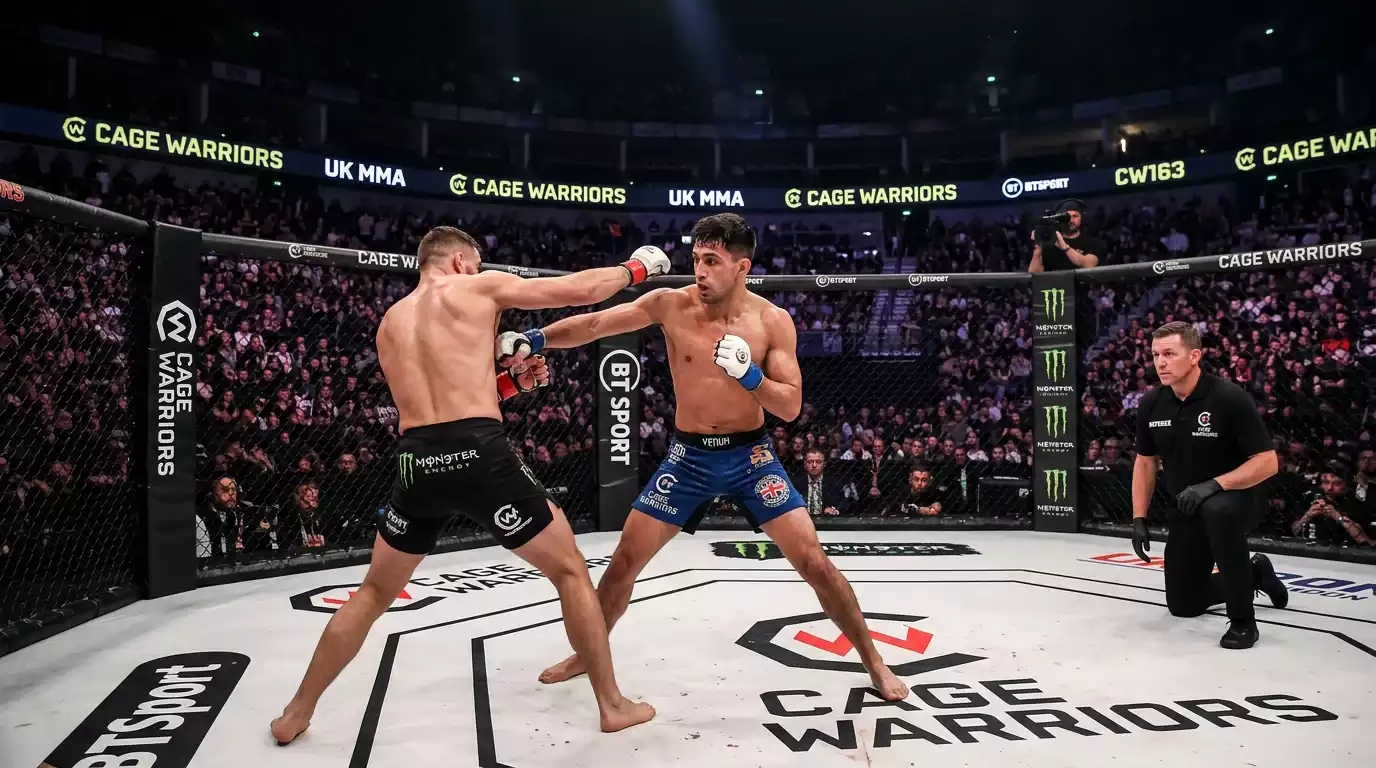
The three-year sample of UFC and Cage Warriors late-notice fighters shows positive return on investment in UK markets when they were priced above the favourite line, especially in round one. The reason is structural: a fighter who took a bout on five days’ notice is typically fresher in round one than the long-camp opponent. He has not done a full weight cut. He has not done two months of grinding training camp. His energy systems are intact in a way the original opponent’s are not.
The cost of late notice shows up in rounds two and three. The replacement runs out of conditioning, has not built fight-specific cardio, and fades against an opponent who has done the work. The fight that goes the distance against a replacement almost always goes to the long-camp fighter.
The bet that captures this is the round-one finish on the replacement, or the round-one over-1.5-strikes-by-replacement, or any market that resolves in the first five minutes. The price often does not reflect the freshness edge, because the operator’s model is weighting career profile rather than camp-state, and the freshness window is invisible to the public.
The discipline is to back the replacement narrowly — round one, first five minutes, specific aggressive markets — rather than backing him to win the fight outright. The outright bet asks for cardio over five rounds, which the replacement rarely has. The narrow bet asks for output in the freshness window, which the replacement almost always has.
A Three-Year Sample of Outcomes
Across roughly 36 months of UFC and Cage Warriors cards, late-notice fighters — those taking bouts on less than 10 days’ notice — produced positive return on investment in UK markets when their price was above the favourite line. The aggregate ROI in the sample was not extreme — single-digit percentage on flat-stake exposure — but it was positive and consistent enough across the period to suggest a structural mispricing rather than a hot streak.
The aggregate hides important segmentation. Replacements stepping up in weight class showed lower ROI than replacements at their natural weight. Replacements with prior experience against the opponent in another organisation produced higher ROI than replacements with no shared history. Replacements coming off a loss in their last fight produced lower ROI than those coming off a win, suggesting the gap is partly psychological as well as physical.
The strongest single segment was the replacement at his natural weight, with at least one prior crossing of paths with the opponent in another promotion or as training partners, coming off a recent win. Inside that narrow segment, the ROI was substantially higher than the aggregate, but the sample size shrinks to a few dozen bouts, which limits statistical confidence.
The discipline of treating the sample as a starting point rather than a prescription is essential. The pattern holds in aggregate. Individual fights vary. A late replacement against an opponent on a serious win streak, in a venue that favours the long-camp fighter, is a different bet from a late replacement on a Fight Night against a journeyman opponent.
For the broader read on how line movement around the bout window — including replacement announcements and weigh-in shifts — affects pricing, the natural follow-on is my walkthrough of weigh-in day line movement.
When to Skip the Replacement Card
Three structures should make you skip the replacement bet entirely.
The first is the replacement coming up two or more weight classes. A featherweight stepping in for a lightweight bout, or worse a welterweight stepping in for a middleweight, is fighting on borrowed power. The strike differentials that made him competitive at his natural weight do not transfer to the new division. The under on his strike output is usually the bet, but even that carries variance from the unfamiliar speed of the heavier opponent.
The second is the replacement on under three days’ notice. The freshness edge that justifies the round-one read only holds when the fighter has had at least a few days to acclimatise to the venue, study any film, and get a sense of the matchup. Under three days, the chaos of the announcement itself dominates, and the round-one edge is replaced by uncertainty in every direction.
The third is the bout where the original opponent withdrew under disputed circumstances — illness during fight week, a leak about a failed drug test, or any signal that the matchup itself was unstable before the replacement was announced. UFC’s response to the 2025 cases where integrity alerts triggered fight pulls — Dana White’s “we got called from the gaming integrity service and I said, ‘I’m not doing this s*** again,’ so we pulled the fight” – is the public-facing version of an internal review process that now scrutinises late shifts more aggressively. If the replacement bout itself is at risk of being pulled before the cage, the bet carries cancellation risk on top of style risk.
The first two conditions sharpen the read on which replacement bouts to fade. The third is the condition that suggests sitting out altogether. The replacement market is generally a positive-EV corner of the UFC menu, but it is not a corner that rewards forcing the bet on every late shuffle.
Explore betting mma for situational UFC analysis.
The Replacement Bet I Keep Coming Back To
The bet I have placed more often than any other in the replacement category is fighter-to-win-by-KO-in-round-one. The price is long enough to cover variance. The mechanism is consistent with the freshness edge. The data supports it across the three-year sample.
The discipline is to back the bet only on replacements who fit the segment — natural weight, prior history with opponent, recent win — and skip the others. The temptation to spread late-replacement bets across every late-window announcement is real and corrosive. The market rewards selectivity, and the operator’s margin on the wider menu of replacement props will collect from punters who do not selectively choose.
Are catchweight replacements treated the same as same-weight replacements?
No. Catchweight replacements — where the original bout’s contracted weight is adjusted upward to accommodate a fighter from a different division — usually carry different stylistic implications and tend to favour the original-weight-class fighter from the bigger side of the catchweight. The empirical record on catchweight bouts is murkier than same-weight, with smaller samples per matchup type, so the historical edges that hold for natural-weight replacements do not transfer cleanly. Treat catchweight replacement bouts as a separate category and require sharper specific reads.
Why do replacement prices sometimes over-correct after the announcement?
The market reacts to news, not to information value. When a replacement is announced, the public adjusts on the headline – ‘this fighter is replacing a higher-ranked opponent’ – without weighing the freshness edge, the natural-weight advantage, or the round-one cardio gap. The operator’s algorithmic adjustment is often more measured than the public movement, which is why the line drifts further than the underlying probability shift justifies. The window in which the over-correction is largest is usually the first 24 hours after the announcement, before sharper money or operator rebalancing pushes the line back toward equilibrium.
Written by the editors at Betting mma.