Weigh-In Day: How UFC Lines Move Before the Bell
 Available in US
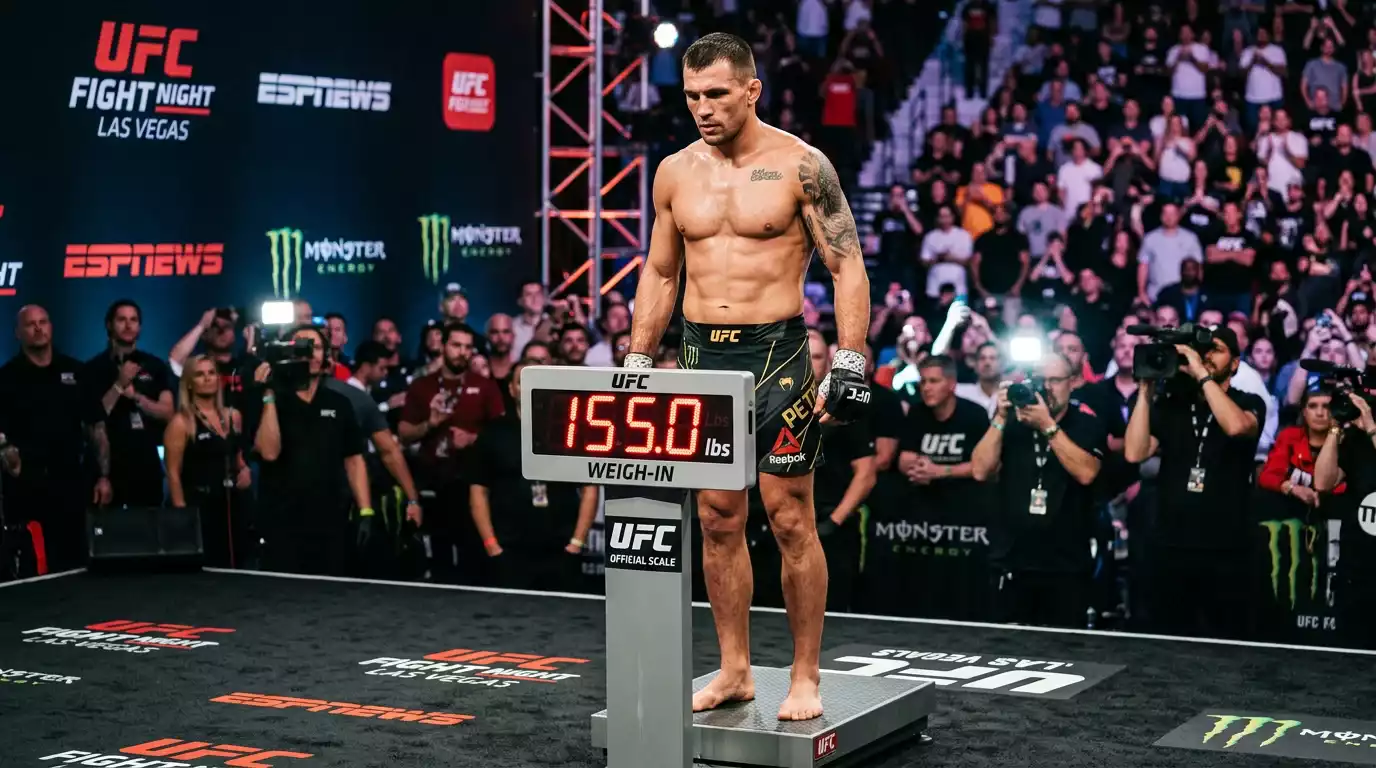
The four hours between the end of UFC weigh-ins and the start of the next morning’s market reopen are the most informationally dense window of any fight week. The scale tells you whether a fighter made weight on the first attempt, on the second, or not at all. The face-off tells you whether the fighter is hydrated, dehydrated, or visibly compromised. The press scrum tells you whether the fighter sounds sharp or slurred. All of that compresses into a line movement that most punters watch passively rather than actively.
The fights where the line moves three to five per cent after weigh-ins are the fights where the operator has updated its model based on new information. The fights where the line moves twelve to fifteen per cent are the fights where something happened on the scale that changes the read materially. Knowing which is which is the practical art.
Factor in UFC coaching changes as another driver of pre-fight line shifts.
Typical Shifts After Successful Weigh-In
The standard line movement after a clean weigh-in is small. A favourite who made weight on time, looked sharp on the scale, and exchanged a confident face-off with the opponent will see his moneyline tighten by perhaps three per cent through the overnight period and the morning. The underdog drifts by the same amount on the other side.
The reason the movement is small is that successful weigh-ins are the default expectation. The market priced the fight assuming both fighters would make weight cleanly. When they do, the line confirms rather than updates, and the operator’s adjustment is largely about absorbing late public action rather than repricing the fight.
The Dulgarian case in November 2025 — where the coefficient on Dulgarian shifted dramatically from minus 250 to minus 154 in the day before the fight — sits at the extreme end of what line movement can look like, and it triggered the integrity response that pulled the bout. The standard movement is several orders of magnitude smaller and reflects legitimate model updates rather than alert-level shifts.
Where the line movement after a clean weigh-in tells you something is in the direction of the shift. A line that tightens toward the favourite after clean weigh-ins on both sides is signalling sharp money confirming the favourite. A line that drifts toward the underdog after clean weigh-ins is signalling sharp money on the underdog or public money on the favourite that the operator is absorbing. The latter is more common than the former and is a quieter signal that the underdog price is being supported by serious capital, not just public sentiment.
What Happens When a Fighter Misses Weight
Missed weights produce the largest legitimate line movements of any fight-week event short of a withdrawal. The shift can be 15 to 30 per cent of the original price depending on the size of the miss and the weight class.
A featherweight missing by half a pound is a different proposition from a heavyweight missing by three pounds. The featherweight miss signals struggle in the final hours of the cut and usually predicts a compromised fighter who absorbs strikes poorly and runs out of cardio in round two. The heavyweight miss is more often a logistical issue — failed re-hydration timing, miscommunication with the commission — and predicts less about fight-night performance.
The line shift after a missed weight typically goes against the fighter who missed, regardless of who was the original favourite. A favourite who missed weight will see his moneyline lengthen by 20 to 40 per cent. An underdog who missed weight will see his price stretch even further, sometimes doubling.
The compensation structure adds an extra layer. Standard UFC contracts include a 20 to 30 per cent purse forfeit for the fighter who missed weight, redirected to the opponent. The opponent has now received an extra payday to absorb the unfair advantage of a slightly heavier opponent. The economic dynamic does not change the betting probability, but it changes the fighter-side incentive — opponents sometimes accept difficult matchups partly because the forfeit makes the bout worthwhile.
The market sometimes overshoots the missed-weight adjustment. A featherweight missing by half a pound is not always a meaningfully compromised fighter; some cuts are difficult, the fighter rehydrates, and the bout proceeds as if the miss had not happened. If the line shifts 25 per cent on a half-pound miss, the value sometimes sits in fading the over-reaction and backing the original favourite at the lengthened price.
Catchweight Bouts: A Pricing Reset
When a missed weight is large enough that the commission orders the bout to proceed at a catchweight, the market resets more fundamentally than a standard missed-weight shift suggests.
Catchweight bouts proceed at the actual weight of the heavier fighter rather than the contracted limit. So a featherweight bout where one fighter weighs in at 149 pounds — three pounds over the 146 limit — becomes a 149-pound catchweight bout. The bout is recorded as a catchweight in the official commission record, and the title implications, if any, disappear.
The pricing reset reflects two changes. First, the fighter who made weight is competing at a weight he was not preparing for, against an opponent carrying extra mass. Second, the over-weight fighter has signalled either inability or unwillingness to make the contracted weight, which carries forward as a question mark on future cuts.
The empirical record on catchweight bouts is murky. The smaller fighter wins more often than the headline implies, but the variance is wider, and the over-weight fighter often shows energy advantages that translate to mid-fight pressure. The market sometimes prices catchweight bouts close to a recalculated coin flip when the underlying fight is still more decisive than that.
UFC’s reading of card-level integrity — the organisation works with an independent betting integrity service to monitor wagering activity on every event — applies to catchweight outcomes the same way it applies to standard outcomes. Markets on catchweight bouts settle on the official commission result, which is recorded explicitly as a catchweight win or loss rather than as a featherweight or lightweight result.
When Not to Chase the Move
The line movement after weigh-ins is informative, but it is not always actionable. Three situations should make you sit out rather than chase.
The first is the immediate post-announcement window. If the line moves three per cent in the first hour after weigh-ins, the move is often the operator’s first absorption of public reaction rather than a settled equilibrium. The price often moves back partially within the next several hours. Chasing the initial three-per-cent move is sometimes chasing into volatility that has not stabilised.
The second is the bout where the move contradicts the visual evidence of the weigh-in. If a fighter made weight cleanly, looked sharp, and exchanged a confident face-off, but the line is drifting against him, something is signalling that you are not seeing. Sometimes that something is the operator’s late information about training camp injuries. Sometimes it is unusual public action that the operator is absorbing. Either way, betting against the drift in the absence of a clear visual or recent-record edge is betting against information you do not have.
The third is the bout that has triggered any unusual operator response — markets suspended for longer than the standard weigh-in window, market reopens with wider margins, sudden absence of cash-out availability. Andrew Rhodes’ UKGC speech in 2025 noted that the regulator “saw a 300 per cent increase in the number of criminal cases” the commission was taking, which sits as the wider background for the heightened scrutiny operators now apply to unusual late-week activity. Bouts where operators are visibly being cautious carry implicit cancellation risk, and the line movement during the caution window is not stable enough to back confidently.
For the broader read on how integrity alerts feed back into line movement and bout pulls, the natural follow-on is my walkthrough of suspicious UFC betting cases in 2025.
See also: betting mma for UFC line movement analysis.
The Hours That Reward Reading
The window between weigh-ins and the bell is the only window where the punter has as much information as the operator’s algorithm, and sometimes more. The algorithm sees the scale number and the official measurements. The punter watching the weigh-in livestream sees the fighter’s face, the second-attempt struggle, the way he absorbed the cut, the way he moves at the face-off.
The discipline is to act only on the reads that align with both the visual evidence and the line movement. When both signal in the same direction, the bet is sharp. When they disagree, the bet is intuition fighting against the operator’s information, and the operator wins those bets reliably.
Are bets voided if a fighter misses weight at the official weigh-in?
No. Missed weight does not void existing bets at UK sportsbooks. The bout proceeds at a catchweight if the commission approves it, and existing bets carry through to settlement on the new terms. The operator typically suspends the market briefly for repricing, then reopens with adjusted lines. Bets already placed at the original moneyline remain valid and settle on the bout’s actual outcome. The only situation that voids bets is the cancellation of the bout entirely, which is rarer than a missed weight.
How does the catchweight purse forfeit affect betting odds?
The forfeit itself does not change the betting probability or settlement. It changes the fighter-side incentive by transferring 20 to 30 per cent of the missed-weight fighter’s purse to the opponent, but the bout itself is still scored and settled on the standard rules. The market sometimes prices in a slight motivation premium for the opponent — who is now financially compensated for absorbing the unfair advantage — but the empirical effect on actual fight outcomes is small enough that the line adjustment is usually within standard model error.
Prepared by the Betting mma editorial staff.