UFC Prop Bets: Significant Strikes, Takedowns and Control Time
 Available in US
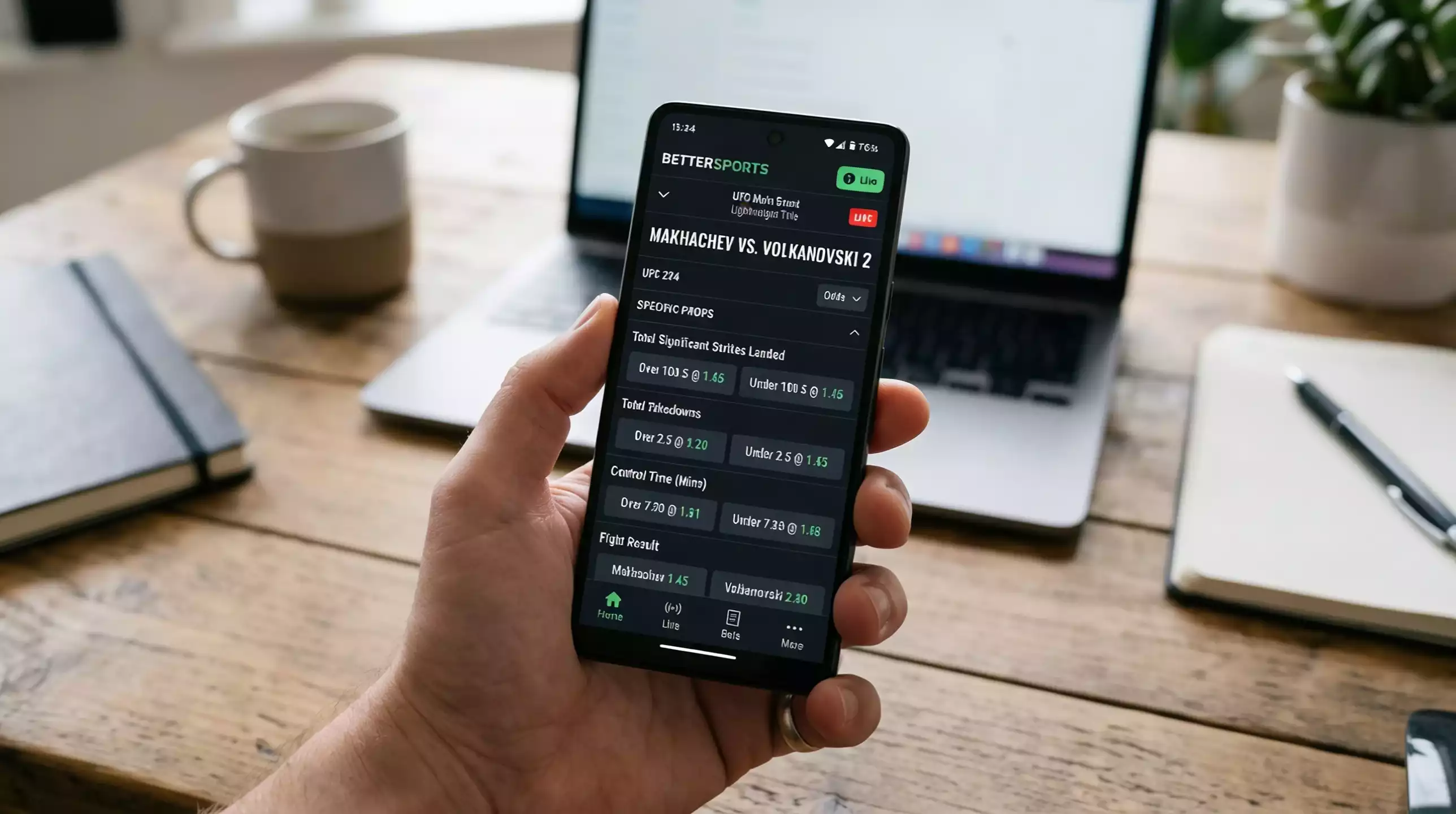
Prop markets are the corner of the UFC menu where the operator most openly admits it does not know. A method bet asks one question. A round bet asks two. A significant strikes total asks “how many?” – a continuous variable that the operator has to estimate, price, and defend against punters who watch the same fights they do.
The gap between estimate and reality is wider on prop markets than on any other category. That gap is where the value lives, and it is also where the variance lives. The same dataset that gives you a clean read on a fighter’s strike output is the dataset the operator’s traders are looking at, and they are looking at it sharper than they did three years ago.
Dive deeper into significant strike differential betting for sharper picks.
Significant Strike Totals
The headline prop on most UFC bouts is total significant strikes landed by a named fighter, with a half-strike line — over or under 75.5, for example — to prevent push outcomes. The line moves with weight class, the fight contract length, and the historical output of the specific fighter.
A three-round bout typically sees fighter-level strike totals priced between 50 and 100 strikes for high-volume fighters, 25 and 60 for low-volume fighters. Five-round main events shift those numbers up by roughly 60 per cent, since the extra cage time produces proportionally more landed strikes — though not quite linearly, since championship rounds tend to slow.
The single most useful signal for backing a strike-total over is the historical strike rate per minute of cage time, adjusted for opponent style. A fighter who lands four strikes per minute against orthodox-stance opponents but two strikes per minute against southpaws will see his output collapse against a southpaw opponent the operator has already priced into the line. If your read disagrees with the operator’s stance adjustment, you have a real bet. If your read agrees, you are paying margin for the privilege of staking.
The historical UFC data on fighters with positive significant strike differential above 1.5 systematically out-finishing the field carries through to strike-total props. A fighter who outlands his opponents by more than 1.5 strikes per minute is producing the volume that pushes over-the-line outcomes, and the operator’s line on the under is sometimes set lazily on career averages that have shifted recently.
Takedown Volume Markets
Takedown totals are the prop most often blocked from inclusion in bet builders, for a structural reason: takedowns are highly correlated with control time, which is correlated with method-of-victory outcomes, which is correlated with the round-of-finish market. The whole tree of grappling props moves together, and the operator’s engine refuses combinations that would multiply the same underlying outcome four ways.
The standalone takedown market is usually priced as over or under a half-line — over 1.5 takedowns landed, over 2.5, over 0.5 for fights involving a known but inconsistent wrestler. The line varies more dramatically than the strike total because takedowns are a binary action with low base rates rather than a continuous accumulation.
The factors that move takedown lines are takedown defence rate of the opponent (above 80 per cent kills the over almost reflexively), the fighter’s takedown attempt rate per minute (which often differs from the takedown success rate), and the cage geometry of the venue. UFC events at smaller cages produce more takedowns than events at larger cages, because the closing distance to the fence is shorter and reactive shots find their mark more often.
The fighter who attempts six takedowns and lands one is a different proposition for the under than the fighter who attempts two takedowns and lands one. Both have a single landed takedown on the record, but the first is signalling a wrestling-led gameplan that will keep attempting, and the over 1.5 line on his next fight is structurally more likely to land than the bare attempt rate suggests.
Control Time and Round Domination
Control time props — over or under a specific number of seconds of ground or clinch control — are the prop that most directly captures grappling outcomes without entering the method-of-victory or round-of-finish space.
Lines on control time typically sit between 60 and 240 seconds for a three-round bout. The over on a heavy wrestler against a poor-takedown-defence opponent can clear the line in a single round, especially when the wrestler immediately works to mount or back rather than stalling in side control. The under on the same fighter against an opponent with elite takedown defence may pay even when the wrestler wins the moneyline, because the win comes through striking output that the operator priced as a grappling outcome.
The cleanest reads on control time come from watching the takedown chain across the fighter’s last three bouts. A wrestler who chains takedown attempts into clinch control, then back to takedown attempts, accumulates time even on missed takedowns because the clinch entries themselves register as control. A wrestler who shoots once per round and either lands or returns to striking range accumulates less time even on landed takedowns.
The mistake I have made on control-time markets is treating “wrestler versus striker” as the only matchup that produces over outcomes. Grappling-versus-grappling matchups can produce as much or more control time, especially when one fighter has a meaningful positional advantage that produces extended top-control sequences. Watch the takedown defence numbers on both sides, not just the wrestler’s takedown rate.
Which Stat Provider Settles
Every UFC prop bet settles on official stats. The provider is critical: UFC uses its own statistical service, and the operator’s settlement rules anchor to that service rather than to broadcast announcer counts or third-party trackers.
This matters because broadcast and operator numbers occasionally diverge. The official UFC stats provider may count a partial strike — a glancing blow that the broadcast did not register — while the broadcast counts a clean follow-up that the stat provider scored as part of a flurry. Differences are usually small, but on a prop bet sitting on the line, the official number is the only one that matters.
Significant strikes, in the UFC’s stats methodology, means strikes that are scored as power strikes or strikes thrown at distance with intent to damage. Jabs that pop-and-retract are sometimes scored as significant, sometimes not. Pittering body shots from inside the clinch are usually not counted. The methodology is consistent across cards, but it is not obvious from watching the fight live.
Takedowns, in the official methodology, require both the entry and a moment of clear top-position control. A failed shot that ends with the fighter on top in scramble does not always count as a takedown. The official record waits for sustained position. This is one of the most common sources of “I thought he took him down four times” complaints from punters whose bet went under by one.
Control time is measured by the official scoring team in real time, with adjustments after the fact. The published numbers settle the market. Operators wait for the official confirmation before settling prop bets, which means cash-outs are sometimes available before settlement and sometimes not.
For the deeper read on how strike-differential metrics feed into the broader prop landscape and method-of-victory edges, the natural follow-on is my walkthrough of significant strike differential as an edge metric.
Visit betting mma for all UFC prop guides.
Why Prop Markets Reward Specialisation
Prop bets are the corner of the UFC menu where the punters who profit most consistently specialise narrowly. The trader who tracks only takedown defence rates across the last 24 months can identify mispriced takedown markets faster than the operator can adjust. The trader who watches significant strike output by stance can find stance-mismatch overs the line doesn’t catch.
The trade-off is volume. Specialised prop reads come up two or three times a card. Spreading thin across every prop on every fight produces variance without edge, and the cumulative four to eight per cent margins across prop markets — wider than the moneyline because the operator hides margin in the half-line bands — grind down generalist portfolios reliably.
The discipline is to identify the propMarket where you have a specific informational edge and ignore the others. If you cannot articulate why you have an edge on a given strike total – “I have watched both fighters’ last four bouts and the volume rate against this stance is X” – the bet is intuition wearing the costume of analysis.
Are strike props graded on landed strikes or strikes attempted?
Standard UK sportsbook settlement on significant strike props uses landed strikes only, as recorded by the official UFC stats provider. Strikes thrown but blocked, missed, or caught do not count toward the over. The line on attempts is offered separately by some operators but is less common. Always confirm which version of the strike count the prop is settling on before placing — the wording is usually ‘significant strikes landed’ but in fast-build menus it can be ambiguous.
Which stat source settles UFC prop bets at UK sportsbooks?
UK sportsbooks settle UFC prop bets on the official UFC stats provider’s published numbers, not on broadcast announcer counts or third-party trackers. The official record updates in real time during the bout and is finalised by the scoring team after the fight ends. Settlement on the prop market waits for the official confirmation, which is usually published within minutes of the bout ending but can occasionally take longer if the scoring team needs to review a contested round.
Published by the Betting mma team.