ProhiBet and IC360: How UFC Integrity Monitoring Actually Works
 Available in US
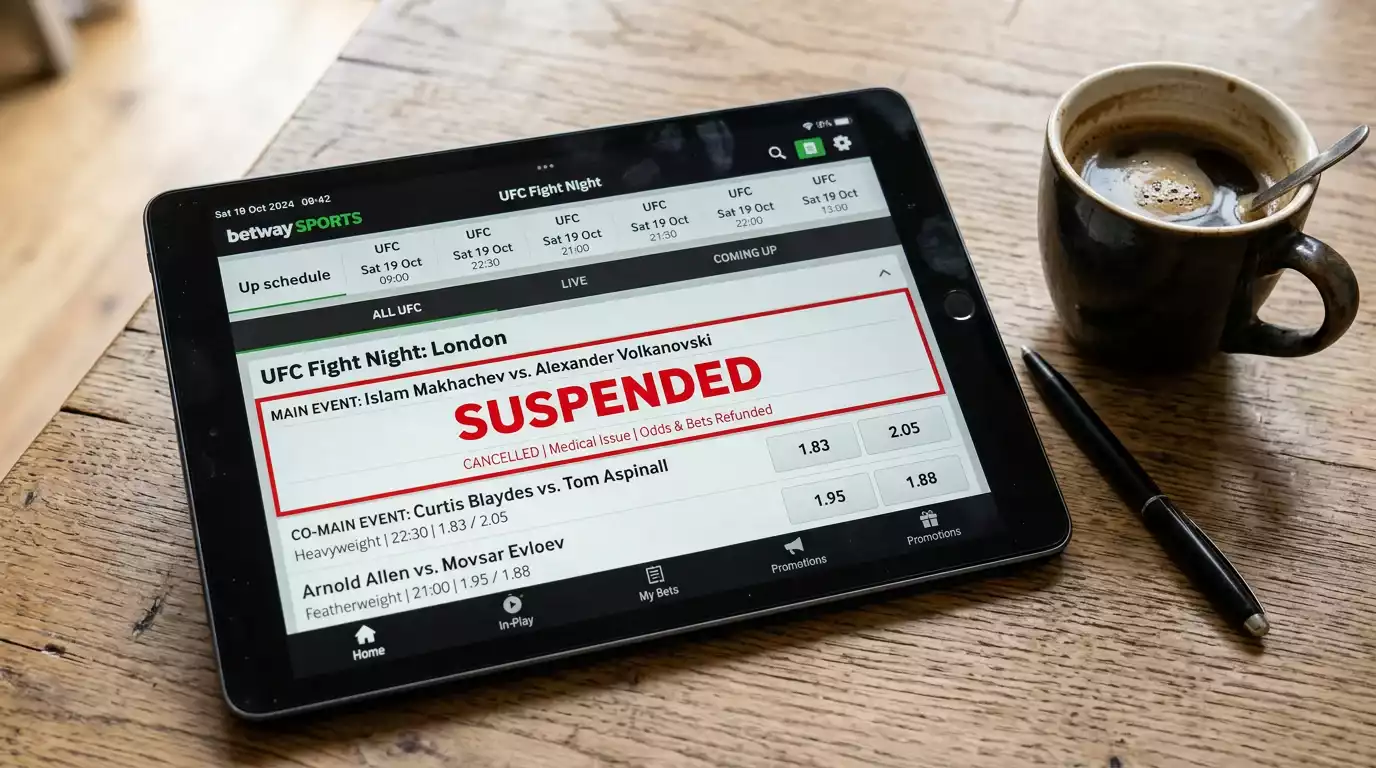
Three years ago, the phrase “betting integrity service” meant nothing to most UFC punters. Today it sits behind every line on every card, and the cases that have made the news in 2025 and into 2026 have forced even casual bettors to pay attention. The Dulgarian fight pulled the day before the November 2025 card, the January 2026 Johnson vs Hernandez bout withdrawn before UFC 324, the FBI reportedly scrutinising more than a hundred UFC bouts for abnormal betting patterns — these are not isolated incidents. They are the visible surface of a monitoring infrastructure that has tightened rapidly across the last 24 months.
I have watched bets I placed weeks in advance evaporate because the integrity wrap flagged an event the morning of the card. Understanding how that wrap works is no longer optional for serious UFC bettors. It changes how you stake, when you place, and which fights you treat as live exposures versus contingent ones.
Review real cases in our UFC suspicious betting 2025 report.
What ProhiBet and IC360 Actually Do
ProhiBet and IC360 are two separate but overlapping services in the broader integrity ecosystem. They are not regulators. They are commercial monitoring providers that ingest wagering data from operators, compare it against expected betting patterns, and flag anomalies for investigation.
The mechanism is essentially statistical. A fight opens with a moneyline at minus 250 on one side. The integrity service receives the live wagering ticker from participating operators — stake sizes, timing, account types, geographies, line movements. It runs that ticker against a model of expected betting flow. If the actual flow diverges from the expected flow beyond a defined threshold — unusual stake concentration from a specific region, sudden volume on a specific market like round-one finish, line movement that contradicts public sentiment — the system flags the event for human review.
The flag is the start of the process, not the end. A flagged event triggers a closer look at the underlying tickets, the accounts placing them, and any communications data the operator can share under its terms of service. Most flags resolve as benign — a sharp punter chasing a model edge, a regional book taking large stakes from a known whale, a coincidence of timing. A minority resolve into a referral to the UFC’s compliance team, the relevant athletic commission, or law enforcement.
The UFC’s official line on the integrity wrap is direct: the organisation “works with an independent betting integrity service to monitor wagering activity on our events,” and that monitoring runs across every UFC card. The standard quote the UFC uses on this – “like many professional sports organizations, UFC works with an independent betting integrity service to monitor wagering activity on our events” – is the public-facing version of a system that, in practice, runs continuously and surfaces flags multiple times per card.
The Dulgarian Case and What Followed
November 2025 produced the canonical recent example. A bout featuring Isaac Dulgarian saw the moneyline shift from minus 250 to minus 154 inside a tight window before the card. The line movement was sharper than any public information justified. The integrity service flagged the bout. The UFC pulled the fight before the cage.
The settlement that followed reshaped how UK punters think about integrity exposure. Caesars and DraftKings refunded stakes on the cancelled fight. Other operators followed similar procedures. Slips were unwound. UFC president Dana White’s response captured the institutional shift: “we got called from the gaming integrity service and I said, ‘I’m not doing this s*** again,’ so we pulled the fight.” That “again” is the key word. The 2025 case was not the first. It was the most public.
The January 2026 Johnson vs Hernandez pull-down at UFC 324 followed the same pattern. The bout was withdrawn before the card. The mechanism was the same: integrity flag, UFC response, fight removed. The pattern is now a procedural norm rather than an exception.
What is less widely reported is the FBI’s reported scrutiny of more than a hundred UFC bouts for abnormal betting patterns across the 2024 and 2025 calendar. The number is unconfirmed officially, but the trajectory it implies is unambiguous: the integrity wrap is not just commercial monitoring. It is feeding into law enforcement investigations that operate on a different timeline and a different evidentiary standard.
How a Flag Translates to a Pull-Down
The chain from a flagged line movement to a pulled fight runs through three stages, and understanding the stages helps you predict where exposure sits on your slip.
The first stage is the data anomaly. The integrity service receives wagering data — typically from operators in jurisdictions that have signed data-sharing agreements — and runs it against the expected pattern model. The flag fires when the deviation crosses a threshold. The threshold is not public, and it varies by event size, market type, and operator.
The second stage is the human review. Analysts examine the flagged tickets, the accounts behind them, the timing relative to public information, and any cross-reference with the fighter, his camp, or his immediate associates. This stage typically takes hours to days, depending on the volume of data and the complexity of the patterns.
The third stage is the escalation. If the review concludes the anomaly is consistent with an integrity event — inside information, attempted match manipulation, undisclosed conflicts — the service refers the case to the UFC, the relevant commission, and any law enforcement partner with jurisdiction. The UFC decision to pull a fight is then a commercial and reputational judgement on top of the integrity finding.
The 2025 IBIA data underlines the wider scale. The International Betting Integrity Association recorded 300 alerts across all sports in 2025, an increase of 29 per cent on the 232 alerts from 2024. Across all those alerts, 54 corrupted matches were identified and 24 athletes sanctioned across five sports, including one MMA athlete. IBIA CEO Khalid Ali framed the broader picture clearly: the 2025 data and the 20th anniversary strategic roadmap point toward an integrity ecosystem that is both more active and more coordinated than at any prior point in the sport’s history.
What This Means for Your Slip
The practical implications for UK punters are concrete and worth listing.
First, any bet placed on a fight that gets pulled before the cage will void. Standard UK treatment is full stake refund. The timing of the credit varies by operator — some refund within hours, others take 48 to 72 hours, and a small number process the refund only after the card concludes. If you are running a bankroll on rolling stakes, build in the lag.
Second, multiples and bet builders that include a pulled leg are affected differently than singles. A pulled fight inside a multiple typically voids that leg only — the remaining legs continue, with the multiple recalculating odds. A pulled fight inside a bet builder usually voids the entire builder. The asymmetry matters when you are building tickets on cards with even moderate cancellation risk.
Third, the regulatory wrap around UK punter behaviour has tightened alongside the integrity wrap on UFC cards. The UK Gambling Commission requires operators to prompt account holders to set a deposit limit before their first deposit and to review that limit every six months. The same regulator’s data records that over four per cent of UK gambling accounts have been restricted on commercial grounds — many of them profitable accounts the operator no longer wishes to accept large stakes from. UKGC chief executive Andrew Rhodes flagged the broader trend in 2025: the regulator “saw a 300 per cent increase in the number of criminal cases” referred for enforcement that year, a number that captures both gambling-related and integrity-related referrals across the UK industry.
Fourth, the betting infrastructure now reacts faster than it did three years ago. Lines move within minutes of a flag firing. Operators suspend markets on flagged events before the UFC’s public statement. A line that moves 30 or 40 points in 15 minutes without public news is a signal worth respecting. It often resolves into a pull-down by the morning of the card. I have moved exposure off three fights in 2025 on the basis of unexplained late line moves, and two of those three were subsequently pulled.
For the wider context of how these line moves play out across the weigh-in window specifically, the natural follow-on is the deeper read in my walkthrough of weigh-in day line movement.
UK Punter Posture in 2026
The posture I have adopted, and which I recommend to anyone running serious UFC exposure, has three components.
The first is to treat the integrity wrap as a feature rather than an obstacle. The fights that get pulled are fights you did not want to be on anyway. The refund mechanism returns your stake. The wrap improves the integrity of every other fight on the card you have backed.
The second is to monitor late line moves with the same attention you give to weigh-in news. A line that moves without public justification is the most actionable signal you will see between when the card is announced and when the cage closes. The signal is consistent. Operators react. The integrity service flags. The UFC responds. By the time the public news breaks, the cycle is half-complete.
The third is to keep the financial-limit prompts active. The UKGC’s mandatory deposit-limit prompts before the first deposit, and every six months after, are the consumer-protection layer underneath the commercial-restriction layer. Use them. The behavioural friction the prompts introduce is also the friction that prevents you from chasing a flagged fight back into your slip after the refund credits.
See also: betting mma for UFC integrity resources.
The Punter’s New Posture
The integrity ecosystem is now the deepest single change in how UFC cards transact since the sport went mainstream. ProhiBet and IC360 are not abstractions. They are the reason fights get pulled, slips get voided, and the markets you read on your phone behave the way they do in the 36 hours before a card. Punters who understand the system bet differently — with smaller late exposures, with more attention to unexplained line moves, with built-in tolerance for cancellation lag, and with a clear-eyed view of what “the fight is on” actually means in 2026.
Three years ago, you placed a bet and waited for the cage to open. Now you place a bet, watch the line, and wait to see whether the integrity wrap will let the cage open at all. The shift is structural. It will not reverse.
For the natural next read, my walkthrough of betting UFC London cards and the UK home-crowd effect continues the analysis at the next layer of detail.
What happens to my bet if a UFC fight is pulled before the card?
Standard UK treatment is to void the bet and refund the full stake. The timing of the refund varies by operator — some process within hours, others take 48 to 72 hours, and a small minority process refunds only after the card concludes. Multiples typically have the pulled leg voided while the rest of the slip continues with recalculated odds. Bet builders on the pulled fight are usually voided in their entirety since they are structurally a single bet on a single bout.
Can integrity monitoring affect bets I have already placed weeks in advance?
Yes. The integrity wrap runs across every UFC card from announcement through to the cage door, and a fight can be pulled at any point in that window. If the bout is pulled, every bet placed on that fight — including bets placed weeks in advance — voids on the standard UK refund treatment. Lines on the surrounding bouts are typically unaffected, but markets specifically tied to the pulled fight suspend and refund. The advance-placement window does not protect against late-window cancellations.
Created by the ”Betting mma” editorial team.