UFC London Cards: Betting UK Fighters at Home
 Available in US

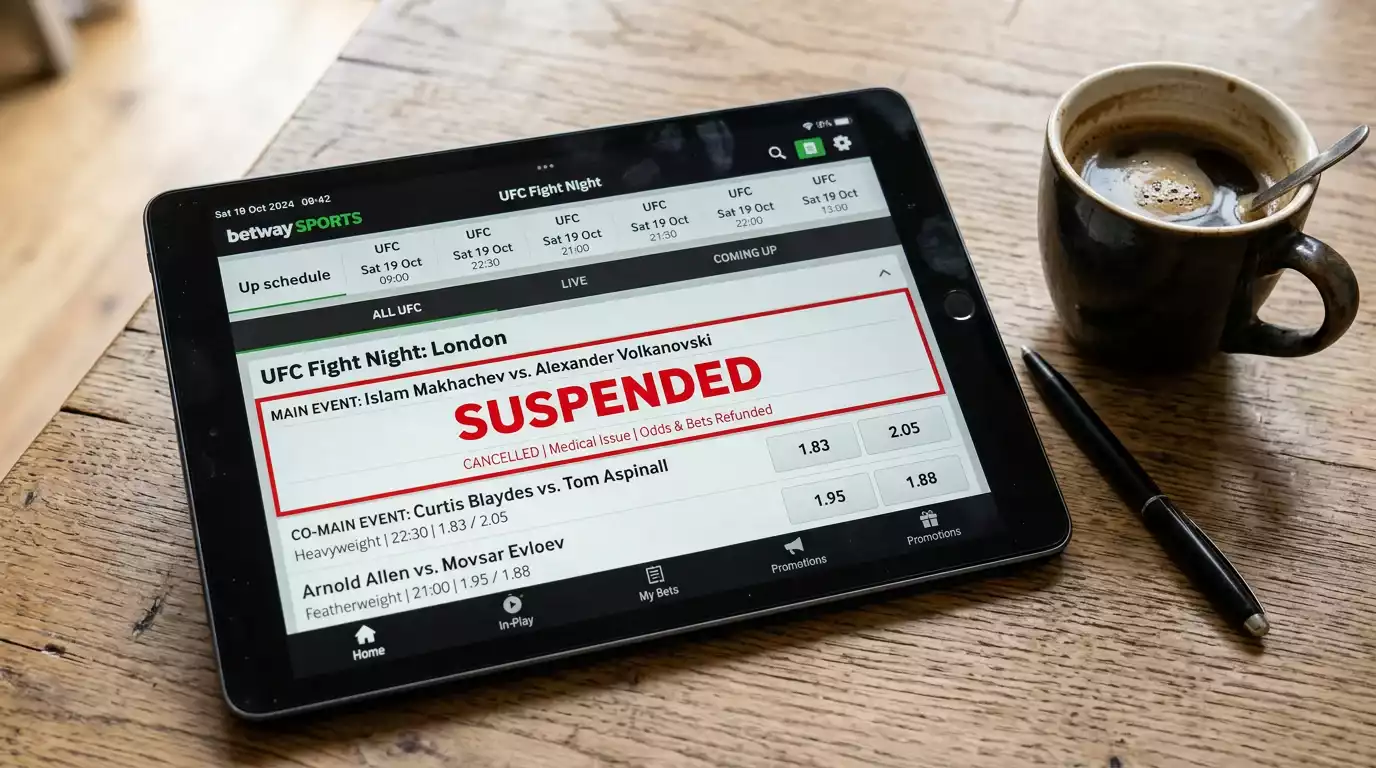
UFC London is the rowdiest card on the international calendar. The O2 Arena holds the energy of a Premier League derby crammed into a smaller building with the lights down low and the crowd standing for every walk-out. I have worked these cards in person and from a laptop, and the home-fighter effect on the betting markets is real, measurable, and consistently underpriced by punters who watch the cards from outside the UK.
The numbers from March 2026 make the point. UFC Fight Night Evloev versus Murphy at the O2 drew 18,629 in attendance and a £3.56 million gate. Those are headline numbers for a Fight Night card, and they sit on top of a betting market that prices UK fighters differently from how the same fighters get priced on cards in Las Vegas or Abu Dhabi.
Follow the feeder pipeline with Cage Warriors UK betting insights.
The Home-Crowd Effect: Real or Romantic
Sceptics push back on the home-crowd narrative every card cycle. The fights happen in a cage. The cage is the same size in London as in Las Vegas. The judges are commissioned officials with no obligation to favour a local. The fighters have the same training camps and the same physical attributes regardless of postcode. So why does the effect persist?
The empirical answer is that the effect is real but small, concentrated in three specific channels, and worth between two and four percentage points on win probability for the right type of fighter in the right type of fight.
The first channel is output. UK fighters on UK cards consistently land more significant strikes per round than the same fighters on overseas cards. The crowd lifts the corner work, the corner work lifts the fighter, and the higher output produces both more finishes and more decision wins on cards judges are scoring partly on activity.
The second channel is the judges’ bias toward visible aggression in scoring close rounds. This is uncomfortable to say but documented across multiple sports. A close round with a crowd reaction tilts marginal calls toward the fighter the crowd is backing. The effect is not large, but on a fight that comes down to one swing round, two cents on the scorecard is the entire margin.
The third channel is the cardio carry-through in deep rounds. Fighters performing in front of family, friends and a partisan home crowd push through fatigue in round three differently than they do in round three of a Las Vegas Tuesday-night prelim. The effect is psychological, but the energy expenditure data shows it as real output rather than perceived intensity.
Add the three channels and the home-fighter has a marginal edge over the same fighter on neutral cards. The market sometimes prices that edge correctly. Often it does not, especially on early-prelim UK fighters where the operator’s model has fewer data points to work with.
O2 Arena and Manchester: The Two UK Markets
UFC’s UK rotation runs primarily through two venues: the O2 Arena in London and the AO Arena in Manchester. Both are major-city arenas with strong public transport, walk-in food and drink within five minutes of the doors, and capacity in the high teens to low twenties of thousands. Both produce strong gate numbers when the card is fronted by a ranked UK fighter.
The fan profile differs subtly. London cards attract more international travellers, more corporate attendance through hospitality boxes, and a slightly more curated demographic. Manchester cards skew more domestic, more vocal, and arguably louder in the back of the upper bowl. The difference does not change the betting markets meaningfully, but it does change the cornerwork and the in-fight energy for fighters who feed off crowd noise.
Dana White’s standing line on the London market – “London is one of the world’s greatest sporting cities and the fans are incredibly passionate about UFC” – is marketing copy with an empirical foundation. The gate numbers track the rhetoric. The £3.56 million gate at the Evloev vs Murphy card in March 2026 sat at the upper end of the Fight Night distribution. The attendance number of 18,629 was near-capacity for a card without a top-five PPV main event.
For punters, the venue itself is a small input rather than a large one. The bigger input is which UK fighters appear on the card and how the public is pricing their bouts.
UK Fighter Price Bands
The public has favourites among UK fighters, and the public’s enthusiasm distorts price bands in predictable ways. The result is that some UK fighters are systematically overpriced on UK cards, and others are systematically underpriced.
The overpriced category is the popular but mid-tier UK fighter. He has fan recognition. He has a marketing presence. He has a couple of highlight finishes from earlier in his UFC run. The public backs him heavily on home cards, and the line moves to reflect that money. The result is a moneyline that prices him at, say, decimal 1.65 when the empirical record across his recent fights suggests fair pricing closer to decimal 1.95. The public is paying for the story. The sharp punter fades the story.
The underpriced category is the technical UK fighter without the marketing wattage. He may be ranked. He may be on a strong run. But he does not move the public dial. The line stays close to the model price, and on a home card where the home-crowd channels add two to four points of probability, the underpricing is the cleanest single edge available.
Identifying which category a fighter sits in is partly a matter of recent media presence and partly a matter of social-media engagement. A fighter trending on UK Twitter the week of the card is in the overpriced bucket. A fighter who is simply on the card with a clean recent record is more often in the underpriced one.
How I Bet UK Fighters on Home Cards
The framework I use has four steps, and it is more boring than the romantic version of betting UFC London cards suggests.
Step one is to identify which UK fighters on the card are heavily backed by the public. Line moves in the 48 hours before the card are the cleanest signal. If a UK fighter’s price has shortened by 15 per cent or more from the opening line without injury news or weigh-in issues, the public has moved it. Fade that line if your model disagrees with the new price.
Step two is to look at the matchup style for UK fighters not in the public’s spotlight. A technical UK striker against a hittable overseas opponent on a home card is the canonical sharp position. The crowd channels feed the UK fighter’s output. The matchup style produces the finish. The price has not moved because the public is busy with the headliner.
Step three is to consider method markets rather than moneylines. The home-crowd effect feeds finishes more strongly than it feeds decisions, partly because fighters press harder in deep rounds and partly because the crowd lifts power output in critical exchanges. UK fighters on UK cards finish at a marginally higher rate than the same fighters on neutral cards. The KO/TKO method bucket is often a sharper bet than the moneyline.
Step four is to monitor late line movement for integrity flags. The 2025 and 2026 Dulgarian and Johnson cases are the recent context. UK cards have not seen high-profile pulls in 2026 to date, but the integrity wrap runs on every event. A late line move on a UK card without weigh-in news or public injury reports should prompt caution rather than confidence.
For the deeper read on how late line moves play out specifically across the weigh-in window, the follow-on is in my walkthrough of UFC weigh-in day line movement.
The Manchester and Cardiff Cards
UFC’s UK rotation has expanded beyond London in recent years. Manchester cards have become an annual or semi-annual fixture. Cardiff has hosted shows in the past, with the prospect of a return in the wider 2026 and 2027 calendar.
The betting dynamics on Manchester cards differ slightly from London. The fighter base is similar — the same UK roster appears on whichever UK card the matchmakers schedule them for — but the public lean is more domestic. Less corporate attendance means less hospitality-driven public bias on the prices. Lines on Manchester cards often sit closer to the model price than London cards do, which means the public-fade plays are weaker but the underpriced-technical-fighter plays are stronger.
The 2026 calendar so far has featured fewer UK cards than the prior two years. The reduction has consolidated UK punter attention onto the cards that do happen, increasing public bias on the popular fighters and tightening the windows where sharp positions are available. The market structure favours patient bettors who wait for two or three specific opportunities per card rather than spreading exposure across multiple bouts.
UK Female Fighters and the Strawweight Bracket
The UK women’s roster has grown across the last three years. Specific names move through the rankings on different timelines, but the structural point holds: the betting market on UK female fighters at home is more often correctly priced than the market on UK male fighters at home, partly because the public bias is weaker and partly because the operator models have fewer corrections to make.
That tighter pricing makes UK female fights on UK cards less profitable as single bets than UK male fights, but it makes them cleaner as components in builders and multiples. The price reflects the fight more accurately, which means the variance from line moves is lower, and the bet builder pricing engine has less correlation tax to apply. If you are building a builder on a UK card, a UK female fighter leg is one of the cleanest legs you can include.
Explore betting mma for UK-focused MMA coverage.
Why I Keep an Eye on Every UK Card
The combination of public bias, home-crowd channels, and consolidated UK punter attention makes UK cards the most informationally rich slate on the calendar from a UK punter’s seat. Every card produces three or four bets worth placing and a dozen worth fading. The discipline is recognising which is which, and the discipline rewards consistency far more than it rewards intuition.
The cards are also the most enjoyable to watch. That is not a betting consideration. But the enjoyment of watching UFC at the O2 with a stake on a UK technical fighter outperforming the public price is one of the few moments where the sport and the market align cleanly. Those moments are the reason I keep coming back to UK cards even when the international calendar is busier.
For the natural next read, my walkthrough of live in-play UFC betting continues the analysis at the next layer of detail.
Does the home-crowd advantage at UFC London affect the moneyline?
Yes, but less than the public assumes. Empirical evidence suggests UK fighters on UK cards carry between two and four percentage points of additional win probability through three specific channels: higher striking output, marginal judges’ bias on close rounds, and stronger cardio in deep rounds in front of a partisan crowd. The operator’s pricing model usually captures this effect partially, but public money frequently overshoots it for popular fighters, leaving the moneyline shorter than fair value on the marketing-friendly UK names.
Are UK female fighters priced differently on UK cards than UK male fighters?
Yes. UK female fighters at home tend to be priced closer to model fair value than UK male fighters, because the public bias on female bouts is weaker and the operator’s model has fewer corrections to make. This makes UK female fighters less profitable as single sharp bets than UK male fighters but cleaner as components in bet builders and multiples, where the tighter pricing reduces variance and the engine applies less correlation tax across legs.
Written by the editors at Betting mma.