UFC Coaching Changes: Reading the Bet When a Fighter Switches Camps
 Available in US
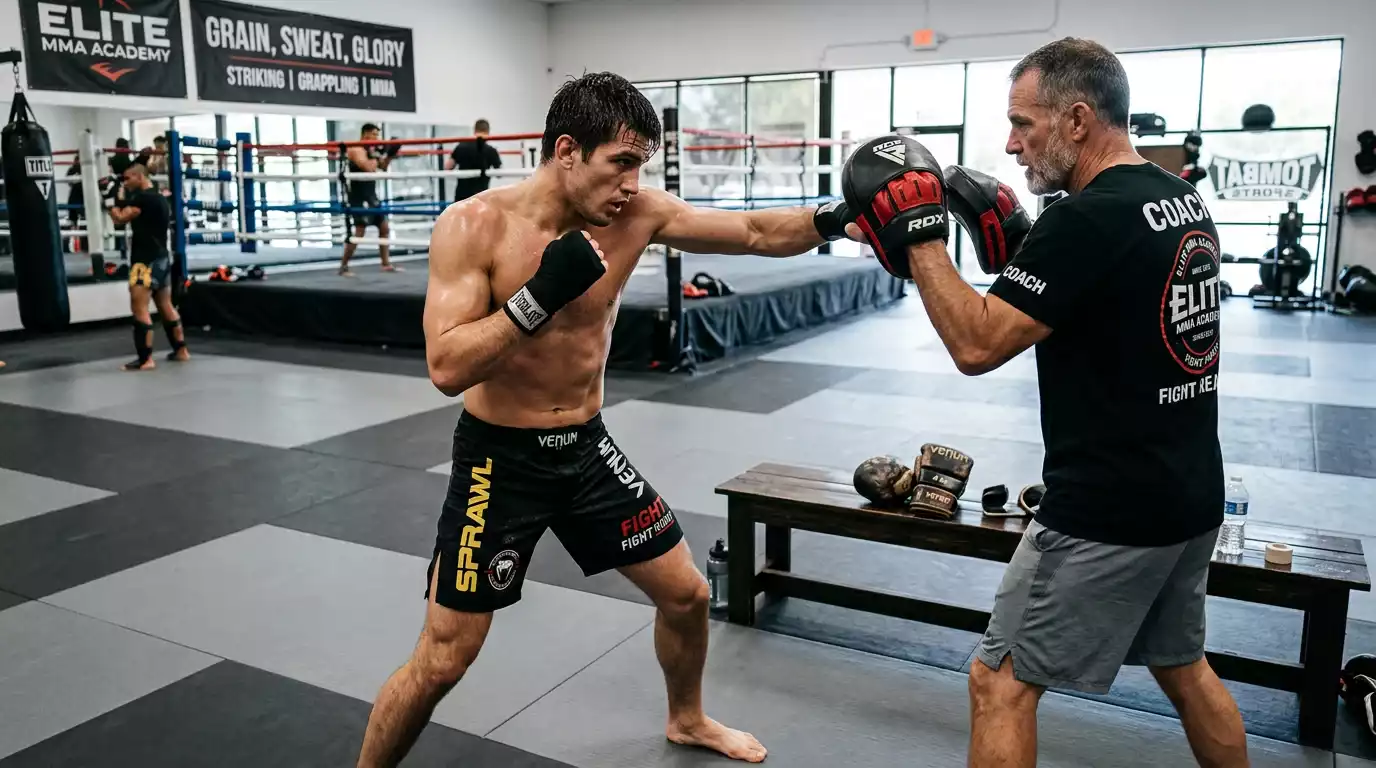
A camp change is the most underweighted piece of pre-fight information in UFC betting. The public reads it as a curiosity. The line moves a few cents at best. The actual on-cage effect, when the change is meaningful, is one of the largest single inputs to a fighter’s performance window — sometimes pushing the matchup probability ten or fifteen points in one direction.
I have spent more time than I care to admit tracking the camp moves of UFC fighters across the last several years. The pattern is uneven — most camp changes do not significantly affect outcomes — but the changes that do matter produce some of the cleanest betting edges available to a punter willing to do the work.
Camp switches often pair with UFC late replacement betting opportunities.
Why Camp Changes Matter
A UFC fighter’s training camp is the source of his strategy, his conditioning, his sparring quality and his corner intelligence during the fight. Changing camps changes all four inputs simultaneously, and not always in the same direction.
The strategic input is the most variable. A fighter moving from a striking-focused gym to a wrestling-focused gym is changing the entire approach to fight construction. The new camp will build a different game plan against the same opponent than the old camp would have. Sometimes the new plan suits the fighter’s existing skill set better. Sometimes it does not.
The conditioning input is the most reliable signal. Some camps run elite strength and conditioning programmes; others rely on the fighter’s individual preparation. A fighter who moves from a thin S&C environment to one with structured programming typically shows up to the cage in better physical condition for the bout. The effect is small per fight but cumulative across multiple camps.
The sparring quality is the input that the public most often underestimates. Sparring against world-class teammates produces different in-cage instincts than sparring against developing teammates. A fighter who joins a camp with multiple ranked UFC fighters at adjacent weight classes spends his camp under exposure to elite reactions, and the in-cage response time of his next bout often reflects that exposure.
The corner intelligence is the most situational. The voice in the fighter’s corner during the bout shapes adjustments between rounds. A new head coach who is calling fights from the corner for the first time on a specific fighter may miss adjustments that a longtime coach would have caught. Conversely, a new coach who has called fights for similar styles may catch adjustments the old coach kept missing.
Three Patterns to Read
Three common camp-change scenarios produce distinct betting implications.
The first is the rebuild move. A fighter on a losing streak moves to a new camp because the previous one was not producing results. The move is reactive. The new camp has weeks to assess and reshape the fighter’s approach. The first bout under the new camp often produces a worse performance than the previous bouts, not a better one, because the fighter is implementing changes incompletely under fight pressure. The line on this fighter sometimes overprices the rebuild narrative. The sharp fade is the fighter who has moved camps inside the last six months and has not yet had a tune-up bout under the new system.
The second is the proactive move. A fighter moves to a new camp from a position of relative success because he believes the next level requires new training inputs. The move is forward-looking. The new camp is usually a step up in resourcing or specialty for the fighter’s specific needs. The first bout under the new camp often shows incremental improvement, with the larger gains appearing over the next two or three bouts. The line on this fighter does not move much because the camp change is positive-framed but uncertain. The sharp back is the fighter who has made a proactive move to an elite camp and is on his second or third bout under the new system.
The third is the return move. A fighter who left a camp earlier in his career returns to that camp. The return is sometimes a reset to known systems after a period of experimentation that did not work. The first bout under the returned camp often shows immediate improvement, because the fighter is working with familiar coaches and systems rather than learning new ones under pressure. The line sometimes underprices the return because the public reads it as a backwards step rather than a return to functioning systems.
Information Sources for Camp Changes
Tracking camp changes requires sources that the public typically does not read. The mainstream UFC media occasionally covers high-profile moves, but the routine moves — a mid-tier fighter changing camps between bouts — are reported on regional MMA outlets, fighter social media, and gym-specific announcements.
The most reliable sources are the gyms themselves. UFC fighter rosters are usually listed on the gym websites of major training centres, and the rosters update when fighters move. Cross-referencing the current roster against the previous roster identifies recent moves. The lag between an announcement and the line update on the operator is usually a window of several days during which the camp-change information is fresh and the price is stale.
Fighter social media is the second source. UFC fighters post training videos with their teammates. A new background or new training partners visible in the videos signals a camp change that has not yet been announced through more formal channels. The discipline is to follow fighters across multiple cards rather than just before each bout.
The third source is the corner work at the previous fight. The cornermen visible in the broadcast feed of a fighter’s last bout are usually identifiable as gym staff. A different corner crew between bouts is one of the clearest signals of a camp change. The signal is visible to anyone watching the prior bout but is rarely tracked by punters who watch the current line in isolation.
The Specific Coaches Who Move Lines
Some head coaches have track records that meaningfully move betting markets when their fighters are scheduled to appear.
The pattern is consistent across the modern UFC era. Coaches with established histories of preparing fighters for specific challenges — wrestling-heavy game plans, southpaw-versus-orthodox preparation, high-volume striking systems — produce predictable adjustments in their fighters’ approaches. A fighter who has just joined a coach known for wrestling preparation, who is facing an opponent with poor takedown defence, is in a different bet from the same fighter under his previous striking-focused coach.
The operator’s model sometimes captures these coach effects, especially for the highest-profile head coaches whose fighters appear regularly on UFC cards. The model does not always capture them for mid-tier coaches who have shaped specific fighters in distinctive ways. The information gap exists at the second tier of head coaches, where the punter who follows the regional and feeder scenes has a sharper read than the operator’s model.
The wider integrity wrap covers coach moves the same way it covers other fight information. UFC’s framing of the integrity partner monitoring wagering activity on every event extends to camp-change patterns. Unusual betting volume on a fighter who has recently changed camps is one of the patterns the integrity service watches, on the reasoning that camp insiders sometimes have non-public information about preparation quality. The 2025 IBIA data showed one MMA athlete sanctioned across the broader sport integrity work that year.
The Tune-Up Bout Pattern
A useful concept for camp-change betting is the tune-up bout. The first bout under a new camp is rarely the bout where the camp’s effect is fully visible. The second bout under the new camp is often where the effects appear.
The mechanism is timing. A fighter typically has six to ten weeks of camp before a UFC bout. The first camp under new coaches is partly an assessment camp — the coaches learning the fighter, the fighter learning the systems. The second camp is more productive because the assessment work has been done. The fighter’s performance in his second bout under the new camp is closer to the new camp’s true effect on his game than his performance in the first.
The betting implication is to fade the first bout under a new camp when the line has moved positively on the camp-change narrative, and back the second bout when the public has not yet recognised the underlying improvement. The pattern produces consistent edges across a year of cards. The discipline is to track which bout you are looking at — first or second — and to weight the line accordingly.
For the wider context on how late-window line movement interacts with camp change information, the deeper read is in my walkthrough of weigh-in day line movement.
The Coaching Stability Signal
An overlooked betting input is coaching stability. A fighter who has worked with the same head coach for multiple years carries a level of strategic continuity that newer combinations do not. The continuity reduces the variance of his performance — the bouts go more often the way the camp planned them, fewer surprises emerge during the fight, the corner adjustments hit the right targets.
Stability is a quiet advantage that the line sometimes captures and sometimes does not. A fighter with three years of coaching continuity against an opponent who has moved camps twice in the last twelve months is in a structurally different bet from the surface moneyline.
The signal is most actionable in close fights priced near evens. The veteran with the stable camp tends to execute his plan more consistently than the fighter with the unstable camp. The line sometimes treats them as equivalents based on records. The structural difference shows up in the cage.
See also: betting mma for tactical UFC insights.
How I Use Camp Information
The framework I have settled into has four steps.
Step one is to identify the fighters on the card who have changed camps in the last six months. The list is usually two or three per UFC card.
Step two is to classify each change as rebuild, proactive or return. The classification determines the expected direction of the effect on the next bout.
Step three is to identify whether the bout is the first or second under the new camp. The timing determines how much weight to put on the camp effect.
Step four is to check whether the line has captured the camp change. If the line has moved meaningfully on the camp news, the sharp position is usually to fade the move. If the line has not moved, the sharp position is to back the structural read.
Four steps. A handful of bets per year where all four align. The bets are not glamorous. The marketing does not lean into them. The operator does not promote them. But the cumulative return over a year of work is the kind of quiet edge that separates punters who do the reading from punters who do not.
For the natural next read, my walkthrough of MMA weight cuts and the betting line continues the analysis at the next layer of detail.
Does a UFC fighter changing camps usually improve his next performance?
Not on average. The first bout under a new camp tends to show incomplete implementation of the new systems and often produces a worse performance than the previous bouts, particularly when the camp change was reactive to a losing streak. The second bout under the new camp is where the camp effect typically becomes visible, because the first camp under new coaches is partly assessment work. Proactive moves to elite camps generally produce stronger second-bout improvements, while reactive rebuild moves often need three bouts before the new systems are working under fight pressure.
Where can I find out about UFC fighter camp changes?
The most reliable sources are the gym websites of major training centres, which list current fighter rosters that update when fighters move between camps. Fighter social media shows training videos that signal camp changes through visible training partners and gym backgrounds. The corner crew visible in the broadcast of a fighter’s prior bout is another indicator — a different corner team between bouts almost always reflects a camp change. The mainstream UFC media covers high-profile moves but rarely tracks the routine mid-tier changes that produce many of the most actionable betting reads.
Created by the ”Betting mma” editorial team.