Stance Edges in UFC: Southpaws, Switch Fighters and Why Orthodox Strugglers Get Mispriced
 Available in US
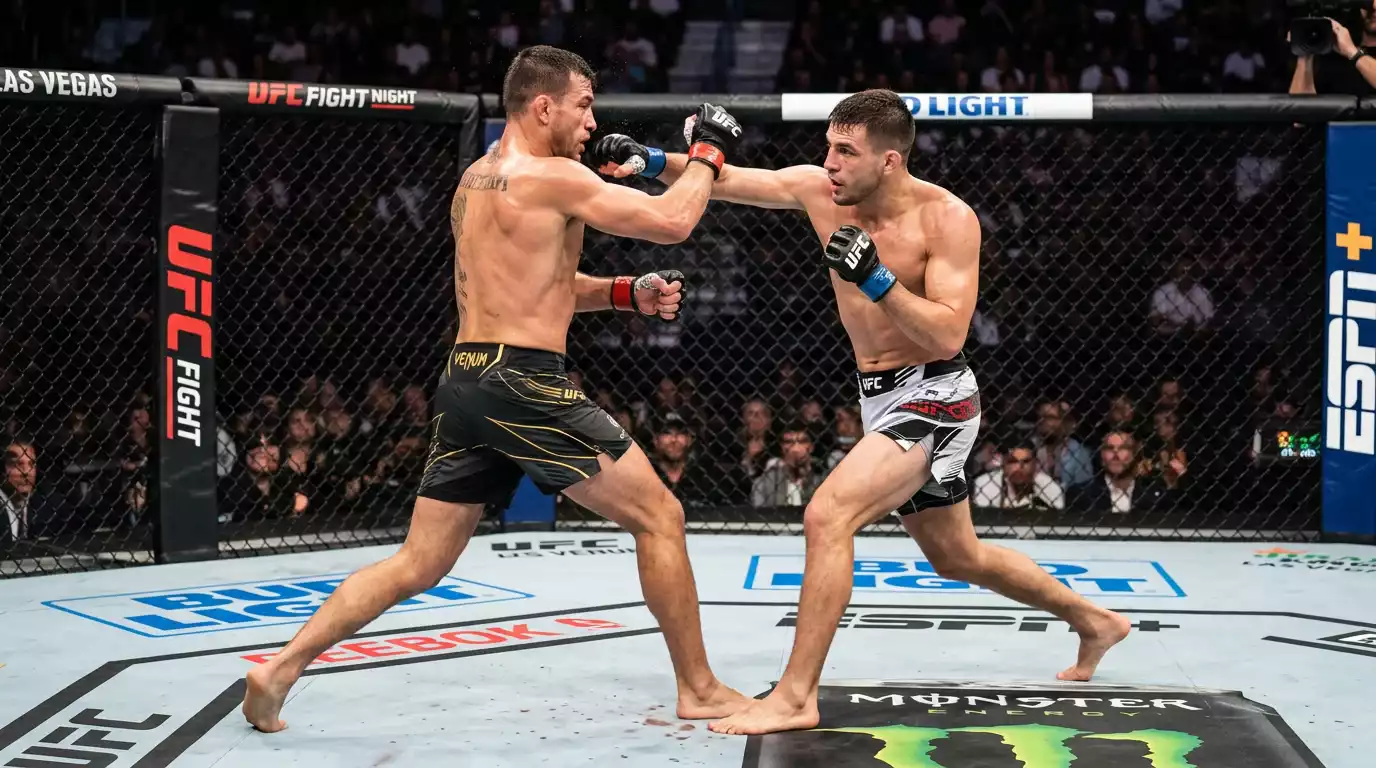
Stance is the cheapest filter a UK UFC bettor can apply. It costs no research time — the orientation is visible in the first five seconds of any fighter’s footage — and it produces betting implications that the public consistently underweights. The empirical record across the UFC sample shows southpaw fighters winning 53 per cent of their bouts and switch-stance fighters winning 57 per cent, against the baseline 50 per cent that would prevail if stance were neutral.
Three to seven percentage points might sound like a small edge. Applied across a year of bouts where stance reads cleanly into the matchup, those points compound into meaningful return. The discipline is recognising which bouts the stance signal applies cleanly to, and which it does not.
Why Southpaw Wins Above Baseline
The 53 per cent southpaw win rate across the UFC sample has three structural explanations. None of them is mysterious. All three are observable in any UFC bout featuring a southpaw against an orthodox opponent.
The first explanation is opportunity inequality. The orthodox stance is the default position for the great majority of strikers worldwide. Orthodox fighters spend their entire training history sparring against other orthodox fighters. They develop reactive instincts tuned to orthodox-versus-orthodox exchanges. When they meet a southpaw, those instincts no longer fit. The southpaw, by contrast, has spent his entire career fighting orthodox opponents. He is on familiar ground. The asymmetry favours the southpaw.
The second explanation is the lead-leg geometry. In orthodox-versus-southpaw exchanges, both fighters have their lead foot positioned on the same side. The lead-leg battle becomes a constant negotiation, and the southpaw is more experienced at navigating it. The orthodox fighter often finds his lead leg checked, kicked or stepped over in ways that take him out of his preferred rhythm.
The third explanation is the power-side alignment. The southpaw’s strongest punch — the rear left straight — travels down a lane that an orthodox opponent’s lead shoulder does not naturally cover. Orthodox fighters need to make conscious adjustments to defend this punch. The defensive habit they have built against orthodox opponents does not transfer cleanly.
The three structural advantages combine into the empirical 53 per cent win rate. The line sometimes captures part of this advantage. It rarely captures the full extent, particularly when the southpaw is the less-marketing-friendly name in the bout.
The Switch-Stance Premium
Switch-stance fighters — those who alternate orthodox and southpaw mid-bout — win 57 per cent of UFC bouts in the historical sample. The four-point premium above the southpaw baseline reflects an additional structural advantage that compounds the southpaw effect.
The mechanism is opponent adjustment cost. A fighter facing a true southpaw can prepare for that stance and develop a camp plan around it. The fight is still difficult, but the preparation has a coherent target. A fighter facing a switch-stance opponent has to prepare for both orientations and switch his reactive instincts mid-bout based on which stance the opponent has chosen for the current exchange.
The cognitive load of constant stance recognition costs the opponent in two ways. The first cost is the delayed reaction to the strikes that arrive in the opponent’s current stance. A counter that would have been reflexive against a static stance becomes a quarter-beat slower when the brain has to identify the current orientation before triggering the counter. That quarter-beat is the difference between landing and not landing many UFC exchanges.
The second cost is the depleted concentration in deeper rounds. The opponent who has spent two rounds tracking stance changes is mentally more fatigued in round three than an opponent in a single-stance bout would be. The switch-stance fighter compounds the physical fatigue with cognitive fatigue, and the late-round performance gap widens.
True switch-stance fighters are rare in UFC. Most fighters who switch occasionally still have a dominant stance and use the switch as a tactical wrinkle rather than a structural choice. Reading the difference between an occasional switcher and a true switch-stance fighter matters — the 57 per cent win rate applies to genuine switch-stance specialists rather than to fighters who change stance once a round.
Where Stance Reads Cleanly
The cleanest stance-read bouts are orthodox-versus-southpaw matchups where the orthodox fighter has limited southpaw experience. The empirical record across the UFC sample is unambiguous: orthodox fighters in their first or second high-stakes bout against a southpaw underperform their expected probability by meaningful margins.
The diagnostic is the orthodox fighter’s recent record against southpaws. If his last three bouts have all been against orthodox opponents, he is structurally exposed in the upcoming southpaw matchup. The line frequently does not price this because the record-against-southpaws is not a standard public statistic. The punter who tracks the metric across his card preparation finds the edge directly.
The opposite read also applies. An orthodox fighter who has consistently faced southpaws across his career — some camps deliberately bring in southpaw sparring partners for this reason — is structurally less vulnerable to the stance asymmetry. The line on his next southpaw bout sometimes treats him as if he were generically orthodox, when in fact he has developed the specific adjustments that neutralise much of the southpaw advantage.
The deeper read on how stance interacts with takedown defence specifically is in my walkthrough of takedown defence as a betting input.
Stance and Method-of-Victory Markets
The stance signal shows up most clearly in method-of-victory markets rather than in moneylines.
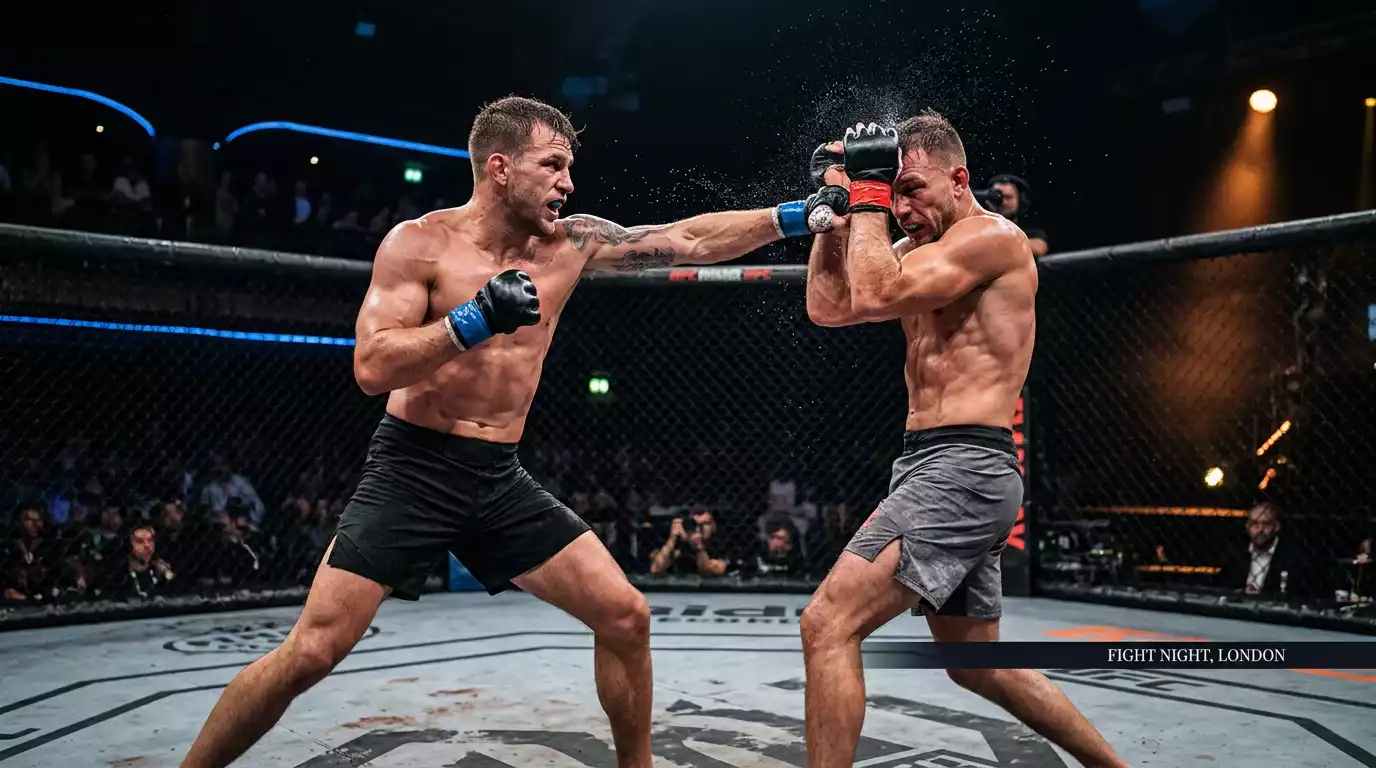
The mechanism is the specific punch landing pattern. The southpaw’s rear left straight — the punch most likely to land cleanly against an unprepared orthodox opponent — is a high-force, single-shot weapon that produces knockouts and TKOs at higher rates than the strikes available in orthodox-versus-orthodox exchanges. When the southpaw lands his rear straight cleanly, the bout often ends inside the distance.
The KO/TKO method bucket on a southpaw against an orthodox opponent with limited southpaw experience is consequently a higher-probability bet than the moneyline alone suggests. The price is sometimes shorter than fair value once the stance read is applied, but the bucket carries the structural advantage in ways the moneyline obscures.
The reverse case — orthodox against southpaw — produces a different method pattern. Orthodox fighters facing southpaws who do land winning shots tend to land them as counter strikes rather than lead strikes. The counter-knockout rate against southpaws in the orthodox win bucket is meaningfully above the baseline orthodox-against-orthodox rate. The method market on the orthodox fighter in this scenario is similarly structured around the counter-finish.
The two patterns combined mean that orthodox-versus-southpaw matchups produce more KO/TKO finishes than orthodox-versus-orthodox matchups, with the finish distribution skewing toward the southpaw side. The over/under rounds line and the no-distance side of the binary distance market also adjust to this pattern.
The Orthodox-Versus-Southpaw Outlier
Some orthodox fighters genuinely perform well against southpaws. Identifying these outliers is the higher-information edge.
The diagnostic indicators are specific. The orthodox fighter has trained extensively against southpaw sparring partners. His camp has a known southpaw specialist on the coaching staff. His recent record against southpaws is positive, or his close-loss list against southpaws shows clearly identifiable adjustments he made successfully.
The line sometimes prices these orthodox outliers as generic orthodox fighters against the southpaw matchup, missing the structural preparation that makes them genuinely competitive. The sharp position is to back the prepared orthodox fighter against the moneyline line, particularly when the public has overweighted the southpaw effect on the basis of stance alone.
The integrity wrap covers stance-related bouts the same as every other UFC fight. UFC’s framing of working with an independent betting integrity service to monitor wagering activity on every event applies regardless of stance dynamics. The 2025 IBIA report recorded 300 alerts across all sports, up 29 per cent from 232 in 2024, and confirmed 54 corrupted matches across the year with 24 athletes sanctioned across five sports including one MMA athlete. The wider context is that the integrity infrastructure has tightened sharply, and unusual betting volume on stance-specific matchups is one of the patterns the service watches.
UK Stance Patterns and the Calendar
The UK UFC roster contains a meaningful proportion of southpaw and switch-stance fighters relative to the general UFC population. The pattern reflects the UK striking tradition, which draws partly on boxing schools where the southpaw stance has been historically less stigmatised than in some other striking cultures.
The implication for UK card preparation is that stance reads apply more frequently on UFC London cards than on average UFC cards. A higher proportion of UK fighters on the home cards bring stance asymmetries into their matchups, which produces more bouts where the stance signal is actionable.
UFC Fight Night Evloev vs Murphy at the O2 Arena in March 2026 drew 18,629 in attendance and a £3.56 million gate, headline numbers that reflect the strength of the UK fight calendar. UFC’s own line on the UK market, captured in Dana White’s standing description – “London is one of the world’s greatest sporting cities and the fans are incredibly passionate about UFC” – acknowledges the depth of the UK base that drives demand for these cards. The betting infrastructure around UK cards has matured alongside, with the stance signal one of the consistent applications.
The Stance Signal’s Limits
Stance is a useful filter but not a deterministic predictor, and recognising its limits matters as much as recognising its applications.
The first limit is that stance does not override skill gaps. A bottom-tier southpaw facing an elite orthodox fighter does not flip his expected probability through stance alone. The structural advantage is three to seven percentage points, not 30. Backing the southpaw because he is southpaw, against an opponent who is clearly better, is the wrong application of the signal.
The second limit is that stance does not always reflect the fighter’s actual approach. Some fighters listed as southpaw on the broadcast graphics actually fight from a near-square stance with minimal lead-foot positioning. The recorded stance does not match the in-cage geometry. Reading the actual fighter rather than the listed label is the discipline.
The third limit is that elite opponents adjust during the bout. A southpaw who lands his rear straight cleanly in round one against an elite orthodox opponent may find that the orthodox fighter has adjusted by round two. The structural advantage erodes over the course of a five-round bout against opponents capable of in-bout adjustment.
The fourth limit is that fatigue compresses the stance signal. Both fighters slow down in deeper rounds. The cognitive load of stance recognition reduces as both fighters operate on automatic patterns rather than conscious choices. The 57 per cent switch-stance win rate is concentrated in the earlier rounds before the cognitive load fades.
The Signal as a Filter
The stance read is most useful as a filter rather than as a primary bet driver. Before placing any UFC bet, the question “what is the stance dynamic in this bout” is one of three or four standing checks I run. If the answer is favourable to my pre-existing read, the bet sizes slightly larger. If unfavourable, the bet sizes smaller or the position is dropped.
The filter approach respects the signal’s actual magnitude. Stance is not a 20-point edge. It is a three-to-seven-point edge that aligns or misaligns with other factors. Applied alongside takedown defence, significant strike differential, cardio reads, and weight-cut quality, the stance filter produces structural assessments that the operator’s model approximates but does not fully replicate.
Two bouts per card where the stance read is clearly informative, integrated with other factors, consistently outperform broader exposure across less-informed picks. The pattern matches the wider UFC betting discipline — small edges compound through patient, repeated application across many cards, and the punter who applies them honestly accumulates returns that the marketing-driven punter never sees.
For the natural next read, my walkthrough of UKGC responsible gambling tools for UFC bettors continues the analysis at the next layer of detail.
Do southpaw UFC fighters always win at the elevated rate of 53 per cent?
No. The 53 per cent win rate is an aggregate across the historical UFC sample, applied across all bouts featuring southpaw fighters regardless of opponent quality. Southpaws against elite orthodox opponents who have trained extensively against southpaws perform closer to the 50 per cent baseline. Southpaws against orthodox opponents with limited southpaw experience perform meaningfully above the aggregate. The signal is most actionable when the orthodox opponent has not faced a southpaw in his last three or four bouts and his camp lacks dedicated southpaw sparring resources.
How do I tell a true switch-stance fighter from a fighter who switches occasionally?
A true switch-stance fighter alternates between orthodox and southpaw frequently across each round, typically multiple times per round, and shows comparable striking output and finishing ability from both stances. A fighter who switches occasionally has a clear dominant stance and uses the switch as a tactical wrinkle for specific exchanges — a counter setup, a clinch entry — rather than as a structural choice. The 57 per cent win rate applies to genuine switch-stance specialists. Watch a fighter’s last two bouts on video before applying the signal, because the broadcast tag does not always distinguish the two cases.
Created by the ”Betting mma” editorial team.